Monday, August 4, 2014

Ebola HF: What You Should Know


This information and image are brought to you by our friends at Global Rescue.

The growing Ebola crisis prompted the U.S. Centers for Disease Control and Prevention to issue a warning on July 31 against non-essential travel to Guinea, Liberia, and Sierra Leone, the West African countries experiencing the outbreak. Also on July 31, the government of Sierra Leone declared a public health emergency to ensure a proper response plan was being implemented to handle the outbreak of the Ebola virus. Additionally, the Ghanaian government announced on July 31 that enhanced medical screening in the form of body temperature scans will take place for those arriving at border crossings as well as at Kotoka International Airport (ACC) in the capital, Accra. Quarantine areas will also be set up at ACC and the country’s border crossings.

Global Rescue is advising their members to closely adhere to the World Health Organization guidelines. Infection by the Ebola virus is by contact with blood or body fluids of an infected person or animal, or by contact with contaminated objects:

-Contact with blood or bodily fluids of a person or corpse infected with the Ebola virus.

-Contact with or handling of wild animals, alive or dead or their raw or undercooked meat.

-Having sexual intercourse with a sick person or a person recovering from Ebola virus disease (EVD) for at least 7 weeks.

-Having contact with any object, such as needles, that has been contaminated with blood or bodily fluids.

-Symptoms include fever, weakness, muscle pain, headache and sore throat. This is followed by vomiting, diarrhea, rash, and in some cases, bleeding.

-Persons who come into direct contact with body fluids of an infected person or animal are at risk.

-There is no licensed vaccine.

Practice careful hygiene and other preventive measures:
-In case of a passenger presenting with symptoms compatible with EVD (fever, weakness, muscle pain, headache, sore throat, vomiting, diarrhea, bleeding) on board of an aircraft, the following measures should be immediately considered, in accordance with operational procedures recommended by the International Air Transport Association (IATA):

-Distancing of other passengers if possible from the symptomatic passenger (re-seating); with the ill travelers preferably near a toilet, for his/her exclusive use.

-Covering nose and mouth of the patient with a surgical facemask (if tolerated).

-Limiting contacts to the passenger to the minimum necessary. More specifically, only one or two (if ill passenger requires more assistance) cabin crew should be taking care of the ill passenger and preferably only the cabin crew that have already been in contact with that passenger.

-Hand washing with soap after any direct or indirect contact with the passenger.

-Immediate notification of authorities at the destination airport in accordance with procedures promulgated by the International Civil Aviation Organization (ICAO).

-Immediate isolation of passenger upon arrival.

-Avoid all contact with blood and body fluids of infected people or animals.

-Do not handle items that may have come in contact with an infected person’s blood or body fluids.

-Avoid contact with wild animals. Do not eat primate meat (“bush meat”).

-Practice good hand washing.

-If you have stayed in the areas where Ebola cases have been recently reported, seek medical attention if you feel sick (fever, headache, achiness, sore throat, diarrhea, vomiting, stomach pain, rash, or red eyes).

-The incubation period of EVD varies from 2 to 21 days. Person-to-person transmission by means of direct contact with infected persons or their body fluids/secretions is considered the principal mode of transmission. In a household study, secondary transmission took place only if direct physical contact occurred. No transmission was reported without this direct contact. Airborne transmission has not been documented during previous EVD outbreaks.

The following link can be accessed for more information: 


Call Global Rescue immediately at 617-459-4200 if you are a traveling Global Rescue member and have questions, symptoms, or concerns about your health.

Note-Diizche Safari Adventures is not licensed to practice medicine or offer medical advice for the treatment of illness or injury. Please seek immediate emergency medical services for the treatment of illness or injury. 

Saturday, July 19, 2014

2014 Safari Rifle Challenge World Championships: Final Report


The 2014 Safari Rifle Challenge World Championships have now concluded. The event was held in Libby, Montana at the Libby Rod and Gun Club. Judging by all of the positive feedback from those that attended, the event was a lot of fun and a great day was had by all! Diizche Safari Adventures was proud to be a sponsor of this year’s fourth annual event. This year’s sponsors, in the order they appeared on the reverse of the event T-Shirt, includes:

Diizche Safari Adventures http://diizchesafariadventures.com/  
Montana Rifle Company http://montanarifleco.com
Mark Sullivan, Professional Hunter-Nitro Express Safaris http://www.nitroexpresssafaris.com/ 
Ruger Firearms www.ruger.com
Wayne Jacobsen-American Hunting Rifles http://www.hunting-rifles.com
Tim Herald-Magnum Hunting Club http://www.magnumhuntclub.com/
Bill Stewart-Red Dirt Elephant
Larry Shores-Shores, Tagman, Butler & Company, PA http://www.shorescpa.com/
Ivan Carter, Professional Hunter http://ivancarter.com/  
Hunters Headquarters http://www.huntersheadquarters.net/ 
Libby Rod and Gun Club  

The plaque shown above is the generic version that was created and donated by us to be presented to the First Place-Overall shooter. I am happy to announce that Andy Larsson from Skinner Sights was the recipient of this First Place-Overall award. Andy was able to shoot straight while also having a lot of fun. Congratulations to Andy! We will be providing Andy a new brass plate for his award so he can display it proudly.

Andy Larsson with His First Place-Overall Trophy
Jay Sheffield was the Match Director for the 2014 Safari Rifle Challenge World Championships. Jay spent a great deal of time coordinating all aspects of event planning, logistics, and donation outreach in addition to the match component. Jay does this each year for the Safari Rifle Challenge World Championships event. Jay provided a post shoot update which I have copied below. I hope you enjoy the narrative, photos, and video link:  

Well, the fourth annual Safari Rifle Challenge World Championships is in the history books and will hopefully be remembered as the best one yet. We had nearly 60 registered shooters from all over the western states (is Texas in the west?) and Canada. An army of volunteers working two ranges, a registration/scorekeeper booth, a raffle booth that drew a name every 5 minutes throughout the day as well as a cook staff to keep us all fed at noon made me very proud.

So, let it be known that Andy Larsson (owner of Skinner Sights) is now the reigning champion of the Safari Rifle Challenge 2014! He narrowly edged out Andy Eff who took second place. For those that missed the shoot, you will be able to read about it in upcoming issues of Outdoor Life and Rifle magazines as John Snow and John Haviland were both in attendance. And for those who can't read, Michael Bane and his crew were also there filming for an upcoming edition of Shooting Gallery on the Outdoor Channel. More to come tomorrow, but thanks for all of your continued support, particularly Jeff Sipe and the staff at Montana Rifle Company and Shawn Joyce of Diizche Safari Adventures. Both are major supporters and their contributions made this event a day to remember!

For those that are interested in such things, this was the course of fire:

2014 Safari Rifle Challenge World Championships
Course of Fire / Stage Descriptions

Muzzle UP and Action OPEN while entering and exiting the range. Do not pick up brass, it will be gathered for you. Confirm your score while still on the firing line.

Stage 1 “Sight in at camp with ReVersa Target Stands”. (Distance 45 yards, round count 2) Starting position is standing with an EMPTY rifle, action closed, safety off; rifle must be held with both hands in the firing position and aimed at the target. On the signal, keeping muzzle pointed safely down range at all times, shooter will retrieve one round, load and fire, reload one round and fire again. Open action for inspection and keep the muzzle pointed up when directed to exit the range.

Stage 2 “Montana Rifle Co. Fast Blast”. (Two shooters, 2 rows of jugs, Distance 25, 35, 45 yards, round count 3). Starting position is standing with 2 rounds in rifle, safety on, finger OFF trigger, low ready position. On the signal shoot any two jugs, reload ONE round and shoot third jug. The first shooter to hit all three jugs receives an additional 1 point. Open action for inspection. Muzzle up to exit the range.

Stage 3 “Diizche Safari Elephant Hunt”. (Distance 25, 45 yards, round count 2). Starting position is standing with one round in chamber, safety on, finger off the trigger, rifle in low ready position. On the signal shoot the 45 yard side brain elephant. After firing, move diagonally approximately 5 yards to the marked position, reload with one round and shoot the 25 yard frontal brain elephant target. Open action for inspection. Muzzle up to exit the range.

Stage 4 “Nitro Express Safaris Crossing Buffalo”. (Distance 40 yards, round count 2). Starting position will be standing with 2 rounds in the rifle, safety on and finger off of the trigger, low ready position. On the signal a crossing buffalo with a gallon jug “lung” will start across in front of you. If you burst the jug with the first shot you will earn 10 points, if you burst it on the second shot then you will only receive 5 points. Open action for inspection, muzzle pointed up when exiting the range.

Stage 5 “Champion DuraSeal Challenge” (Distance 20, 40 yards, round count 2) Starting position is standing with 2 rounds in the rifle, safety on, finger off the trigger, low ready position. On the signal, shoot the hanging three inch DuraSeal ball at 20 yards then shoot the four inch DuraSeal diamond spinner at 40 yards. Shooter earns 10 points per hit. Open action for inspection, muzzle up to exit the range.

Stage 6 “Crocodile DuraSeal Brain Shot” (Distance 75 yards, round count 1) Starting position is shooters choice of standing offhand, standing with sticks, kneeling, or seated on the bare ground. One round in chamber, safety on, finger off the trigger, muzzle pointed down range. On the signal fire one round into the RED DuraSeal “brain” causing it to spin and you will earn 10 points. Hits anywhere else are scored as a miss. Action open for inspection, muzzle up to exit range.

Stage 7 “Nitro Express Safaris Charging Buffalo” (Distance 40 and 15 yards, round count 2) Starting position is standing, 2 rounds in rifle, safety on and finger off the trigger, low ready position. On the signal, the 15 yard buffalo will begin its charge. You must FIRST shoot the gallon water jug at 40 yards and then shoot the charging buffalo with your second shot. 10 points for a burst jug and actual points earned on the Champion target placed over the buffalo brain. Open action for inspection, muzzle up to exit the range.

Stage 8 “Diizche Safari's, Save the Tourist”. (Distance, crossing at 25 yards. Round count 1). Shooter will load and chamber 1 round, engage safety and place rifle on the table. Shooter will then take a seat in the chair 5 yards away from the table. On the signal, the leopard starts and the shooter will move forward, pick up rifle and shoot the crossing leopard, firing one round into the Champion paper target placed over the leopards’ lung area before it gets to the tourist. Points earned will be the actual number scored on the paper target, body hits will be scored as a miss. Open action for inspection, muzzle up while exiting the range.

Stage 9 “Montana Rifle Company Charging Jug Shootout” (Two shooters, Distance; charging from 15 yards, round count 2,) Starting position is standing with 2 rounds in rifle, safety on, finger off the trigger, low ready position. On the signal a cart with 3 hanging jugs charges the two shooters. Shooter on left shoots left jug for 10pts, shooter on right shoots the right jug for 10pts. Once your jug bursts, you may then engage the center jug. Shooter that bursts the center jug earns 10 more points. In case of a tie on middle jug, both shooters will fully load their rifles, safety on, low ready start position. On the signal, each will engage the 50 yard jug placed in front of them. First shooter to burst their jug earns 10 points. Open action for inspection. Muzzle up to exit the range. https://www.youtube.com/watch?v=SsWN0_la3OU

Stage 10 “ReVersa Targets Precision Shoot”. (Distance 25, 35, 45 yards, round count 3). Starting position will be standing with 2 rounds in the rifle, safety on, finger off the trigger, low ready position. On the signal, shoot the 25 and then 35 yard clay birds in the ReVersa Target holder. Transition to the kneeling position, load one additional round, remain kneeling and shoot the 45 yard clay bird. You earn 10 points for each clay target hit. Open action for inspection, muzzle up to exit the range.

Bringing Water Jugs to the Shoot
Registration
Ron Petty of Norma USA and Jeff Sipe of Montana Rifle Company
Stage 4-Nitro Express Safaris Crossing Buffalo
Wayne Jacobsen of American Hunting Rifles Interviewed by Michael Bane
Stage 3-Diizche Safari Elephant Hunt
John Snow of Outdoor Life Magazine & Jeff Sipe
Gene Gordner Checking Out the Raffle Table
Stage 9-Montana Rifle Company Charging Jug Shoot
Shooting Birds in the ReVersa Target Stands
Stage 8-Diizche Safari, Save the Tourist
John Snow (L) and John Haviland (R) Looking at Gene's Old Guns
The Montana Rifle Company Booth
Stage 6-Crocodile DuraSeal Brain Shot
Participant Shirt-Front (Sponsors on Reverse)
If you would like more information about participating in next year’s event, tentatively planned to be held July 2015, be sure to send an email to the attention of Jay Sheffield at: 

Saturday, June 7, 2014

Who Wants To Shoot An Elephant?

Photographs by David Chancellor
Wells Tower, GQ Corrrespondent
Illustrations by Rus Khasanov

Russ Tower joins an exclusive hunting party and reports on one of the last elephant hunts in Botswana with Jeff Rann...If hunting is so disastrous for the long-term survival of the species, why do the countries where it’s legal to hunt elephants have so many more of them than those where the practice is banned?


Sunday, April 27, 2014

How to Prevent and Treat Malaria-Brought to you by Global Rescue


April 25th was World Malaria Day. Malaria is found most often in Africa, Southern Asia, Central America, and South America, and is relatively rare in the United States.

Malaria is caused by a bite from a parasite-infected mosquito. Symptoms of malaria can include fever, chills, sweats, body aches, and muscle pain. Fever that goes away and comes back is fairly common. Nausea, vomiting, abdominal pain, backache, and dark urine are also possible symptoms. More severe forms involving altered mental status and organ involvement typically require hospitalization. Left untreated, malaria can be fatal.

According to the Centers for Disease Control and Prevention:

--3.4 billion people live in areas at risk of malaria transmission in 106 countries and territories.

--The World Health Organization estimates that in 2012, malaria caused 207 million clinical episodes, and 627,000 deaths.

--About 1,500 cases of malaria are diagnosed in the United States annually, mostly in returned travelers.

Dr. Phil Seidenberg, who spent five years living and working in Zambia as Global Rescue’s African Regional Medical Director, has treated many malaria patients in the course of his career. Dr. Seidenberg points out that significant global progress has been made with malaria over the past decade, with better control of malaria and fewer deaths from malaria for multiple reasons. We spoke with Dr. Seidenberg and posed five common questions that travelers may have about the risks, prevention and treatment of malaria.

1. How do I know if malaria is an issue where I’m traveling?

For updated information on countries with malaria, use the resources available through either the Center for Disease Control (CDC) or the World Health Organization (WHO). Both of these organizations have maps with malaria risk levels indicated by country, and for regions within countries as well. Global Rescue members can contact Global Rescue for specific malaria advice.

Travelers headed to Africa should be aware that, while progress has been made in controlling malaria on the continent, an estimated 91% of deaths from malaria in 2010 were in the African Region (CDC). According to the WHO, in recent years, four countries have been certified by WHO as having eliminated malaria: the United Arab Emirates (2007), Morocco (2010), Turkmenistan (2010), and Armenia (2011).

It is important to consider the time of year of your travel. If a country has malaria, there is usually some seasonality to it. Typically malaria follows the rainy season, and is particularly active in the middle to the late part of the rainy season when water is pooling in areas; standing water allows malaria-carrying mosquito larva to populate.

Another consideration is how rural will your travel be, because in general malaria is more common in rural areas. In locations around the world where there is greater control, such as in capital cities, travelers will likely face less risk. However, if travelers are planning on rural travel and there is malaria in these countries, they need to be well informed and take preventive measures.

2. Who are the people greatest at risk?

Anyone who is not native to an area certainly faces an increased susceptibility to malaria. There is a level of tolerance that develops over time in those who are born and live in areas with malaria. A look at global statistics shows that greater than 75% of people who die from malaria are kids under five years old. If you are thinking of bringing kids along to areas with malaria, it is not a definite no-no but it is something to weigh carefully because the kids are the ones who do more poorly. The elderly are the next at-risk population, and the third class of traveler at an increased risk is pregnant women.

3. If I go to a malarial area, should I take medication?

There are anti-malarial prophylactic medications (preventative therapies) that one can take. It is important to note, however, that none of these treatments is 100 percent effective. You should seek advice from your regular healthcare provider, or a provider experienced in travel medicine to help decide which of these medications might be best for your individual health profile.

The primary recommendation I usually give is to choose a simple option such as Doxycycline, which is available everywhere. It needs to be taken only one to two days prior to travel, and the dose is just 100 milligrams once a day. It is contraindicated for kids younger than eight, mainly for cosmetic reasons because it stains teeth. Doxycycline is not a first choice medication for pregnant women, but may be okay to use during pregnancy in certain situations. The major side effect with its use is sun sensitivity. It causes a small number of people to burn really quickly and often the locations with malaria are sunny and tropical. Doxycyline can also be used for skin infections and, among other things, as treatment for some types of pneumonia, so it is in many ways useful to have in a travel case.

Malarone is another great option. It is a very good, safe medication and very well-tolerated, although a little bit more difficult to find outside of travel clinics. Malarone is taken daily, and needs to be started only one to two days before travel. Side effects are minimal. Importantly, Malarone consists of a two-drug punch that greatly reduces the chance of contracting a resistant malarial strain. This medication cannot be used by pregnant women. Malarone is more expensive than the other options, and since it is taken daily, cost could be a factor for some, especially on longer trips.

A third option is mefloquine, or Lariam. It is preferred by some people because it is taken on a weekly, not daily, basis. Lariam, which is safe for pregnant women, must be started at least two to three weeks before travel, and continued for up to four weeks upon completion of travel. While it is less expensive than some other options, Lariam has been shown to have more side effects than any other anti-malarial drug. However, many travelers use Lariam and are just fine. People always ask about Lariam because they hear about people reporting crazy dreams. Psychotic side effects are anecdotal, never really proven, but there is enough anecdotal evidence that typically I suggest other options first.

4. Are there other steps I can take or products to help protect against malaria?

Definitely. Take precautions such as wearing long sleeves, using DEET repellants to ward off mosquitoes, and sleeping under netting. Most countries typically have mosquito nets in stores and even supermarkets, but if you’re concerned that you won’t be able to find them, it is a good idea to buy them in advance. The insecticide treated nets are really the ones to use. People sometimes pre-treat their clothing, too.

It is important to know that the two peaks for malaria transmission are right at dusk and then right before sunrise. These are times when the mosquitoes are a little bit more active and more people are in contact with active mosquitoes, which is probably why transmission occurs most frequently between those two periods. Be especially cautious at these times.

5. What do I do if I’m traveling and I think that I may have malaria?

The first step is to determine if you have malaria. In most African capital cities, you can go into almost any pharmacy and pick up a Rapid Diagnostic Test (RDT). It involves a simple finger prick, a few drops of blood, and a 15-minute wait for results. RDTs are part of the reason that malaria is under control, because we are no longer indiscriminately treating kids and people with fevers that are not malaria. Be cautious about the expiration dates, however, and do not buy anything that has expired. The RDTs are no different for kids versus adults. Another option is to go to a clinic. Almost any clinic operating in malarial countries will be able to do a very quick blood smear or a Rapid Diagnostics Test, too.

What do you do if you have malaria? Most hospitals in malarial countries are more than capable of diagnosing and treating malaria. For treatment, the WHO recommends Artemisinin Combination Therapy, or ACT. However, do not assume that ACT is necessarily what you will receive. Absolutely ask for ACT by name. Most healthcare providers should know what that means, even though there are different trade names in some parts of the world. It is worth knowing that for almost all simple malaria, even complicated malaria, artemisinin compounds are the ones to use. Those that only have single artemisinin are, over time, quite bad for our malaria treatment options because the parasite develops resistance early. (Emerging artemisinin resistance is a major concern, according to the WHO, in certain areas of the world.) The combination therapy hits the parasite with two active medications working against it.

For severe malaria, usually defined by altered mental status or organ dysfunction, in some places they are starting to do artemisinin IV drips. This approach has been shown to be better than good old quinine, which still is very effective. But typically if someone were hospitalized with severe malaria, quinine versus artesunate are the only real options for treatment.

It is extremely important to be vigilant upon returning home. First, if travelers are taking a prophylactic that requires them to continue to take it for a few weeks afterwards, they must make sure to do that. Second, and even more dangerous in my view, is that it is hard to get malaria diagnosed in the States unless someone really thinks about it. In fact, this happened to friends of mine when they came back with their kids from Africa. It is an easy thing for a lab to take a look at a blood smear under with a microscope, but when medical professionals don’t ever see malaria that often, they’re not going to think about it. So, if someone comes back, gets sick and they’re worried about malaria, they need to really be careful that they tell whoever is seeing them, “By the way, I was in Haiti. Can you check me for malaria?” It could be a couple of months before travelers should consider themselves no longer at risk after returning home.

Again, it is always a good idea for travelers to check in with their primary care provider or a travel medicine professional before traveling for a detailed discussion of their risk for malaria.

Tuesday, April 8, 2014

Help Reverse FWS Decision on Elephant Imports from Zimbabwe and Tanzania

On Friday, March 4, 2014 the U.S. Fish and Wildlife Service unilaterally announced a ban on all sport-hunted elephant imports from Zimbabwe and Tanzania from 2014 and going forward. The U.S. FWS decision was not made with consultation of the impacted countries, or with consideration of how conservation funding in Zimbabwe and Tanzania would be gutted. Help reverse this ill-advised ban that guts the funding for anti-poaching efforts in Africa.

How you can help take action to help reverse FWS Decision on Elephant Imports from Zimbabwe and Tanzania:

1. Please go to this link Contact Your Congressional Representative and send a letter to your member of congress. It is important for hunters to get this issue highlighted with the folks that control the purse strings of federal agencies.
2. Come to Washington, D.C. on May 8th for a lobby day on Capitol Hill. Register at this link: Register for Lobby Day FWS's Deputy Director of Policy Steve Guertin will be at breakfast on May 8th where SCI will have a discussion on FWS's policies. If you are in Washington, you can help us in the fight.

If you follow the link you will see that there is a letter/email set-up. You will have the opportunity to add your own comments should you wish to do so. After you provide the required information it will forward the email message directly to your Senators and Representative. It is very easy to do and only takes a couple of minutes. 

Monday, March 17, 2014

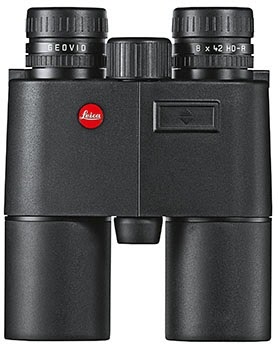
Leica Announces the New Geovid HD-R


The new Geovid HD-R will precisely calculate the Equivalent Horizontal Range (EHR) both uphill and downhill, giving you both the direct linear range and the corrected horizontal range. These should begin to be delivered in April 2014.

Models will include:
Geovid 8x42 HD-R/Meter
Geovid 8x42 HD-R/Yard
Geovid 10x42 HD-R/Meter
Geovid 10x42 HD-R/Yard
Geovid 8x56 HD-R/Meter
Geovid 8x56 HD-R/Yard
Geovid 15x56 HD-R/Meter
Geovid 15x56 HD-R/Yard 

To learn more information about the new Geovid HD-R just follow this link!

Monday, February 24, 2014

Historic Rifles-The Long Journey Home DVD Now Available!


Legendary hunting rifles return to the Dark Continent to fulfill their destiny and confirm their place in safari history. The sport of hunting has a long and storied past where men, places, and events often take on iconic status as the years pass.  Africa, in particular, has been home to countless legendary figures and their deeds since modern man first put pen to paper in an effort to capture and share his experiences in pursuit of game on the Dark Continent.

The lure of ivory opened the interior of Africa. Bold men in search of Africa’s white gold carved their way through its wilderness and into legend as they lived and died on the tracks of elephants and adventure. Most of her storied hunters were sons of Africa born into the great land but not all.

Africa cast her spell on men from across the seas, men who came to love the land, its game, and the danger and drama of the chase. Some of these men, through the written word, would produce works and deeds that continue to this day to ignite the flame of adventure and the thrill of the hunt in those likeminded souls who have followed them.  

The study of African history, Africana, is alive and well today. The desire to see, feel, and sometimes hold history in your hands, is a passion strong in the hearts of certain individuals.


Once in a great while, an iconic figure will inadvertently lend his fame to a companion. Not of flesh and blood but of wood and steel. The rifles carried and used by famous hunters and literary figures become recognized and highly prized treasures of Africana in their own right. This is a film dedicated to their story and the passion of one man to return them to the land and task for which they were born. This is Historic Rifles-The Long Journey Home. Check here for more information or to order!