Monday, July 27, 2015

2015 Safari Rifle Challenge World Championships: Final Report


The 2015 Safari Rifle Challenge drew to a close and was another great success enjoyed by all! This year’s First Place-Overall shooter was Sam Shaw from Washington. Sam did a great job and shot his way through the competition using his Winchester Model 70 Safari Express in .416 Remington Magnum. His rifle was scoped with an older Redfield wide view in 1 ¾ X 5. Sam fed his rifle with 75 grains of 3031 ignited by Remington Large Magnum Primers pushing 350 Grain Speer Hot-Cor Mag-Tip bullets at 2400 FPS.


 The Match Director, Jay Sheffield, provided an update with photos that I have posted below:

Well the 5th annual Safari Rifle Challenge is in the record books. We had 73 registered participants from Montana, Idaho, Texas, Florida, California, Missouri and even a few guys from Canada. All had come to compete for both fame and glory. Top shooter was Sam Shaw of Brewster Washington with a score of 181, second place was John Harma of Montana (178) and 3rd place to NRA Western Region Director Brad Kruger of Sandpoint Idaho (177).

Shawn Joyce of Diizche Safari Adventures stepped up again this year and provided us with several boxes of great gear and is also the title sponsor of our first place trophy. Jeff Sipe of Montana Rifle Company was letting all of the competitors shoot any of the display rifles including their monstrous Flat Brake 505 Gibbs model with all ammo provided FREE by Norma USA. Randy Anderson of Vortex was on hand to discuss their line of optics and donated some outstanding binoculars and scopes for our lunch time raffle. Andy Larsson of Skinner Sights donated several custom rifle bags as well as the winner’s choice of any custom sight in the catalog. Ruger apparel and products were flying off the table, as were the whole series of Mark Sullivan hunting videos!

Our local high school clay target team members worked tirelessly throughout the day moving equipment, patching targets and generally keeping the match moving smoothly. Our shooters showed their appreciation of that effort by purchasing $600 in raffle tickets to support them. These kids recently returned from the state shoot with several 1st and 3rd place trophies in trap, skeet and sporting clays!

Here are a few photos of the event and I will try to post some video later. The crowd favorite "charging buffalo" was cable driven with remote control forward/reverse and variable speed. Set at its highest speed it was coming at you so fast from 35yds that many folks never got off their second shot. The 40 yard shot at the small water bottle on the ground was made more challenging by the 1 gallon jug that was released before the shoot command and was now sliding towards you at 20mph for your second shot. A few folks got wet when it was shot point blank! The crossing elephant was quite challenging and of course the "charging water jug cart" is always popular. Champion/ATK provided all of our self-sealing targets and those various circles, diamonds and large hanging balls took an absolute pounding. They truly can be shot literally hundreds of times and yet remain totally serviceable.


For those that are curious, this was the 2015 course of fire:

Stage 1 Checking Zero, Distance is 45 yards. Round count is 2. Scoring will be the actual number shown on the paper target. Starting position will be with an empty rifle, safety off, pointed at the target in a normal shooting stance. On the shoot command you will load and fire one round then reload and fire the second round. After firing, muzzle will be pointed up during scoring and during your return to the gun racks.

Stage 2 Sliding Jug and Small Bottle, Distance is 20 and 30 yards. Round count is 2. Scoring will be 10 points per bottle/jug that is hit and explodes. Starting position will be low ready with 2 rounds in the rifle, safety on, finger off the trigger. On command, shoot the small water bottle then the sliding jug. Muzzle up, return to gun rack.

Stage 3 Charging Buffalo, Distance is 35 yards and closing. Round count is 2. Scoring will be actual points earned on the paper target. Starting position will be low ready with 2 rounds in the rifle. On command, fire two rounds at the charging buffalo. Muzzle pointed up during scoring and return to the gun rack.

Stage 4 DuraSeal Diamonds, Distance is 30, 10 and 20 yards. Round count is 3. Scoring will be 10 points per 5 inch target hit. Start on the right hand side of the range with one round loaded, safety on, low ready position. On shoot command, fire at the 30 yard target then with empty rifle, muzzle up, move quickly to the middle position. Load and fire one round at target then with muzzle up move to the third position, load one round and fire. Muzzle up and return to gun rack.

Stage 5 Charging Jug Cart, Distance is 20 yards and closing. Round count is 2. Scoring will be 10 points per exploding jug. Two shooters with 2 rounds in gun. Low ready position, safety on. Shoot the jug on your side of the cart then be the first to shoot the middle jug. Muzzle up and return to gun rack.

Stage 6 Crossing Elephant and DuraSeal Ball, Distance 20 and 25 yards, round count is 2. Scoring is actual number on paper target, 10 points for 5 inch DuraSeal ball. Starting position is low ready with 2 rounds in the gun, safety on. On command, you may aim at the crossing elephant but do not shoot until it is PASSING BETWEEN THE ORANGE CONES. Then fire second round at the hanging DuraSeal ball. Muzzle up during scoring and return to gun rack.

Stage 7 Fast Blast, Distance is 15, 35 and 45 yards. Round count is 3. Scoring is 10 points per exploded jug or DuraSeal hit. Starting position is two shooters with 2 rounds in their guns, safety on, low ready. On command, shoot the 45 yard jug then 35 yard jug. Reload one round and shoot the orange 3 inch DuraSeal diamond. Muzzle up and return to gun rack.

Stage 8 Pandemonium, Distance is 25, 30 and 40 yards. Round count is 3. Scoring is 10 points per target hit and 10 points if a shooter explodes the 2 liter bottle. Starting position is two shooters with 2 rounds in gun, safety on, low ready. On command, shoot the 25 yard hanging DuraSeal ball then the 30 yard hanging DuraSeal diamond. If you hit both DuraSeal targets then speed load one round and be the first to shoot the 40 yard bottle. Muzzle up and return to gun rack.

Stage 9 Long Shot, Distance 80 yards, round count 2. Scoring is 10 points for hitting the 1 liter bottle with your first shot, 5 points if it is your second try. Starting position is one round in gun, safety on, low ready. Shot must be taken off hand. Reload and fire again if necessary. Muzzle up, return to gun rack.

Next year, the 2016 Safari Rifle Challenge World Championships will again be held in Libby, Montana at the Libby Rod and Gun Club. The event is always held on the second Sunday in July. There is a large community fund raising concert every year on the second Saturday so they piggy-back with that to give shooters something else to enjoy while they are visiting Libby, Montana. Jay Sheffield (Match Director) puts on an exciting and enjoyable event.

If you have not had the opportunity to attend one of the shoots in beautiful Libby, Montana, then we hope you will make plans to do so in 2016. If you want to be added to the (confidential) email list, just drop Jay a line at safaririflechallenge@yahoo.com

We hope to see you next year!

Saturday, June 27, 2015

2015 Safari Rifle Challenge World Championships-Coming Soon!


The 2015 Safari Rifle Challenge World Championships are coming soon! The event will be held in Libby, Montana at the Libby Rod and Gun Club. Jay Sheffield is the Match Director and puts on an exciting and enjoyable event. It is always held on the second Sunday in July (07-12-2015). There is a large community fund raising concert every year on the second Saturday so they piggy-back with that to give shooters something else to enjoy while they are visiting Libby, Montana. This year Three Dog Night will be headlining the concert.

The shooting event fills-up very quickly after they send notices to the participants on their email group so they don't advertise. If you want to get on their notification list shoot Jay an email (see below) and he will get you on the email group.

Here is an update from Jay regarding the soon to be held 2015 event:

It is once again time for the Safari Rifle Challenge. Now in our 5th year, we continue to grow and I believe we are now one of the largest events of this kind in the country. I recently sent out the registration packs and the response has been almost 100 percent return of previous competitors. I know that the media coverage, particularly on the Outdoor Channel has helped immensely. Michael Bane filmed us for the "Shooting Gallery" TV show. Outdoor Life editor John Snow attended as did author Jon Haviland. There is a high likelihood that the outdoor show "Where in the World is Colorado Buck" will film this year’s event. And several outdoor writers are also likely attendees.

Each year we are trying to up our game and this year we have added a variable speed remotely operated “buffalo” as well as several cable mounted crossing or charging targets. We also expect to blow up about 350 one gallon water jugs in a variety of scenarios.

We are now at a point where we are having to turn away late registrants for lack of space. To address that issue, our club has been working with the U.S. Forest Service and our local County Commissioners to expand the range facility. We have tentatively reached an agreement for a first phase expansion of 5 acres which will get us 3 more ranges. If all goes according to plan, work will start this fall and we will be ready for a major expansion of our event in the summer of 2016 and the ability to handle up to 200 competitors.

Our list of sponsors continues to grow. Many thanks to Shawn Joyce of Diizche Safari Adventures and Jeff Sipe of Montana Rifle Company for their EXTREMELY generous contributions over the last few years. Thanks also to Champion/ATK for their contributions of DuraSeal self-sealing targets, Norma USA for their donation of ammunition and gear, Ruger for shooting apparel and accessories, and Vortex Optics for donating some very nice binos and scope. Mark Sullivan of Nitro Express Safaris donated some great books and a set of videos as did Larry Shores. Skinner Sights also has generously provided prizes.

If you have not had the opportunity to attend one of our shoots in beautiful Libby, Montana, then we hope you will make plans to do so in 2016. If you want to be added to the (confidential) email list, just drop me a line at safaririflechallenge@yahoo.com

Sincerely, Jay C. Sheffield Match Director

Here are a links to coverage from last year’s event in case you might like to learn more:

Monday, April 27, 2015

On Dangerous Ground


I thought long and hard about putting my thoughts to words and then into text on this topic. I knew that there might be a lot of heat, possibly anger from some readers, and maybe even the proverbial guilt by association. Some might be more interested in discrediting the messenger so to speak as opposed to considering the intent of the message. After I wrote this material I shared it with some friends that I respect as professional writers. We agreed that it was not a subject that everyone would be happy with but it was one that is worthy of discussion.

When I first wrote these thoughts down I was planning on sharing them at that time on our blog and elsewhere. I decided to delay posting the material after learning about the recent death of Ian Gibson, Professional Hunter. I did not want this to appear to be written specifically about Ian. First and foremost, this is not about questioning the character of great individuals that have lost their lives. It is not meant to be an underhanded cheap shot, second guessing of actions, or armchair quarterbacking after the fact. Most assuredly it is not a way to besmirch someone because of what occurred or might have been caused by their actions, lack of actions, ingrained philosophies, or of beliefs rooted in their perspective. It is also not meant to serve as a veiled endorsement of a particular hunting style.

With the above said, I recognize that this topic could unintentionally act as a catalyst that shifts the discussion toward the often circular argument of hunting styles. It is probably inevitable for some since this topic will dance around areas contained within that discussion. It might be beneficial to avoid the same old areas of discussion and argument if possible. I hope it will not simply become this type of an interaction but will instead be more about identifying things that might set us up unintentionally and then charting a personal course for corrective actions.

Over the last several years we have lost many skilled professionals to dangerous game hunting deaths. Many of these people were friends of friends or perhaps those we knew and loved personally. Some might suggest or dismiss these losses by saying accidents happened and dangerous game hunting is dangerous. Those of us who choose to participate know this and do so willingly. If you are not willing to take the risk then you should not be a participant. While this is certainly true, perhaps there could be benefit in scratching the surface of the topic just a little deeper.

We are all well aware that unfortunately bad things can and do sometimes just happen to good people. People that are experienced. This is true and unfortunately will continue to occur regardless of our efforts. My focus is not upon that aspect of something that can and will sometimes occur from time to time. Most would agree that we are all the sum of our experiences and also our environment. This is my area of interest and the nexus from where this topic originates.

Often times the ones that we have lost through hunting tragedies with dangerous game has involved individuals well acquainted with their surroundings and who knew an area intimately. They may also have had vast knowledge and experience with dangerous game hunting. This is most often the case.

What if anything happens when the majority of experiences, or a lack of certain types, suddenly culminates in a moment where you have prepared yourself primarily through a non-supportive reinforcement, an unhelpful repetitive action, or through indoctrination? Especially when those things reinforced have always worked in the past. In what ways might or can these factors affect the possibility of an unfavorable outcome occurring or even repeating itself again?

Could subconsciously reinforcing through actions a mindset to avoid certain hunting & tracking situations, and actionable processes, or repetitively ingraining negative habits result in unexpected or negative consequences? If that avoided situation or activity then occurs is the experience unnecessarily uncomfortable, more intense, or possibly more dangerous than it need be? Obviously not everyone can or wants to experience dangerous game hunting where the possibility of charge encounters are not willfully avoided. There are still other areas where those that do not want such an experience can focus and possibly identify areas to improve. As an example, in addition to those areas mentioned in the paragraphs that follow, many clients try to better prepare by attending dangerous game hunting school courses or reviewing hunting DVDs where dangerous game charges are captured.  

Consider if being influenced by any of the following might effect the overall preparedness and/or actions of PHs skilled in dangerous game hunting. Things such as a philosophy handed down from owners/operators of the way hunting is done or perhaps more specifically not to be done. Something as simple as hyper-concern over PHs not holding backup shots to what they deem to be long enough. Until the very last possible moment in their opinion so as not to potentially cause clients to be unhappy. The philosophy then becoming a mindset, perhaps to a fault, of the PH not shooting with or even before a client when appropriate but rather holding off far too long when every split second counts.

Does the continued use of equipment that has malfunctioned in the past or the use of a caliber that is perhaps marginal in situations that are typically avoided create a potential pitfall? Even aspects of things that seem rather benign like the simplest act of handling and viewing unloaded firearms. Do we always strike off the safety when we raise the rifle to our shoulder and then reengage the safety when we come off the shoulder? If we don’t, what might happen when we are thrown into an unexpected situation that takes us by surprise? Are we also practicing with reduced loads on the range instead of full power ammunition because it is less expensive and more comfortable to do so thereby creating a potential for problems?

The spirit and intent of my message is intended to be a positive one and hopefully a means to stimulate further conversation and ideas. A process through which to identify things that we might want to consider but have previously overlooked or disregarded. A moment to review, reinforce, and assure we are properly prepared, carrying the correct mindset, and not unintentionally handicapping ourselves in some way. The message is meant for owner/operators, PHs, and clients alike to consider. We all play a role in the process and activity.

In the field of Emergency Medical Services we utilize a Continuous Quality Improvement (CQI) process conducted through a regional review committee. The process takes place in a confidential environment where specialists come together in an effort to improve system quality. It is a methodology through which a committee of experts, bound by confidentiality, reviews the treatment and outcome of trauma patients. The purpose, to gauge performance and identify what could change to possibly improve patient outcome and survival. It is a simple mechanism to review specific performance areas, identify issues, and address them openly in a confidential setting. The outcome of the process is to identify and chart a path for changes and improvement.

There are many in the professional hunting, firearms manufacturing, and shooting sports community who know me personally. I do not expect that they will all agree with my thoughts and perspective but I do know they will not question my motivation. If this topic stimulates thought within one owner/operator, PH, or dangerous game client to institute change in an area that contributes positively in some way the endeavor is worthwhile. Perhaps subtle changes could have a profound effect when things go in a direction that is unwanted or unexpected while we are on dangerous ground. 

Wednesday, April 8, 2015

Packing for the Outdoors-Tips from our Friends at Global Rescue


This information and images are from an article recently provided by Global Rescue. After reading the material, I thought it would be useful to some and wanted to pass the information along to those who visit our blog. By making just few adjustments to the recommended lists with items such as personal weapons, signal laser, signal strobe, bear spray, and food storage (bear bags) you will have a really solid base list. Remember that personal medications should be part of your first aid kit.

Shawn Joyce, Owner
Diizche Safari Adventures


Article by Drew Pache

Drew Pache is a Manager in Global Rescue’s Security Operations Department. Prior to joining the Global Rescue, he spent 21 years as an officer in the U.S. Army Special Forces. 

Because people head outdoors for many different reasons and encounter different environments during different seasons, it is challenging to compile a “master list” to cover all outdoor activities. However, in my more than two decades in the military where I worked and lived in everything from Arctic cold to desert heat, there are some items that I found it hard to live without. The right equipment on the trail will not only keep you alive; it will also keep you comfortable and allow greater enjoyment of your trip, whatever your activity of choice may be.

In general, I divide my gear into three piles, suitable for 1) a larger backpack 2) a smaller day pack, or 3) to be either worn or kept in my pockets.

Larger Backpack

These items are for living and comfort and include the following:

-Tent/bivy cover
-Sleeping bag
-Sleeping pad
-Mosquito net
-Extra clothing
-Stove/cooking gear
-Food/water
-Towel
-Hatchet

The shelter, sleeping bag, and extra clothing are all dictated by the climate and location, as is the necessity of a mosquito net. I recommend waterproof bags to keep items dry. Food is obviously a necessity, but the type and the elaborateness of its preparation are completely up to you. I am pretty spartan about food on the trail, and literally have spent months eating cold food, even when hot chow was available. However, friends of mine have elevated back country cooking to an art form and can create a gourmet meal from the most meager ingredients. Needless to say, their skills didn’t hurt their popularity.


Day pack

The second category of gear goes in the day pack. When camping or hunting, I usually hike in under the full load. Once camp is set, I venture out on shorter trips from there. The load is much lighter but you still need to have the basics on hand in case you get into trouble (or trouble finds you).

Items for the small pack:

-Water/snacks
-Warming layer
-GPS w/ extra (rechargeable) batteries
-Solar charger
-First aid kit
-Head lamp
-Socks
-Space blanket
-Foam pad (for sitting in cold, snowy conditions)
-Fire-starting gear
-Signal mirror
-Sat phone / texting device (for very remote locations)

The solar charger, a recent addition to my kit, can charge my cell phone, GPS, headlamp and anything else that can be powered with rechargeable batteries. You can even clip it onto your pack and it will charge as you hike. Earlier on the Global Rescue blog, we featured a blog post on the contents of a good first aid kit. Even though this kit is light and packs smaller than you’d think, it will cover you through a variety of misadventures.

To be worn/ in pockets

These are the items I have on me at all times:

-Map of the area and a decent compass

GPS devices are one of the miracles of the modern world, but they can break or run out of batteries at the most inopportune times. It is also easier to terrain-associate with a map than with GPS. I definitely get a better feel for the lay of the land when I can see it on paper.

-Folding knife or multi-tool
-Signal mirror
-Cordage

Parachute cord is great because in a pinch it can be taken apart, or “gutted,” and the smaller strings inside the outer covering can be used individually. They don’t look like much but they are really strong!

-A pair of light but durable gloves

Hard experience has also taught me to protect my hands out there, regardless of the temperature. This prevents the painful scrapes and punctures that are inevitable when traveling in the back country.

-Some type of eye protection

This is important for more than just protection from the sun’s glare. Low branches can pose a nasty hazard, especially when moving in the woods after dark. An eye injury in the backcountry can be disabling and will virtually guarantee a trip to the local ER (if one is available).

The gear above is what I bring on most trips. It does not have to be fancy or high tech and generally the simplest solutions are the best. 

Tuesday, December 2, 2014

Expedition One: A Time for Fun and Adventure


Often times we go to work from day-to-day because we have to pay the bills and not so much because we can’t wait to do so. Over the many years, I have been very fortunate to be able to work in and with various aspects of the international hunting industry. Hardly a day goes by that I don’t wake up and pinch myself to affirm that it’s not a dream. While there are always deadlines and commitments, I feel very fortunate and privileged to be a part it. Unfortunately, a busy schedule with lots of irons in the fire has a way of removing time from the “let’s do this just for fun” category. It just seems these moments rarely happen much unless somehow attached to a project.

Several months ago I had an opportunity to arrange and take part in something just for fun. I was approached by a friend, not in the outdoor/hunting industry, who mentioned it would be great fun if one day we could plan to do some type of a backpacking trip for a couple of days. He was getting ready to deploy overseas and I told him absolutely we could do that and the seed was planted.

We came up with a short list of participants to keep the group small, manageable, and to afford maximum interaction. The group would consist of four additional mutual friends, primarily from military and law enforcement, who were not hunters. Before my friend deployed we made contact with all of the likely participants. They affirmed an interest and commitment to go on a short two to three day adventure in the Sierra Nevada. The destination of the adventure, prior to his departure, was cursory but I had an idea or two for consideration.

The timeline was such that I would have to create an opportunity for scouting out the area. We initially planned the main expedition for mid-October. This would be when my friend returned from deployment. As luck would have it, his return did not occur within our timeline as we had originally expected. The result was our departure date became extended and the group ultimately was much smaller due to scheduling conflicts. All the same, it was a great deal of fun and was the adventure that we hoped to experience.

During the early planning stages we came up with a name for our group. Since we were considering the possibility of doing something like this in coming years, but were unsure who would attend each trip, we named this groups participants Alpha Team. This event would be known as Expedition One (X1). The next step was to create a gear list, which did not take much time. This was distributed so everyone could gather what they would require.


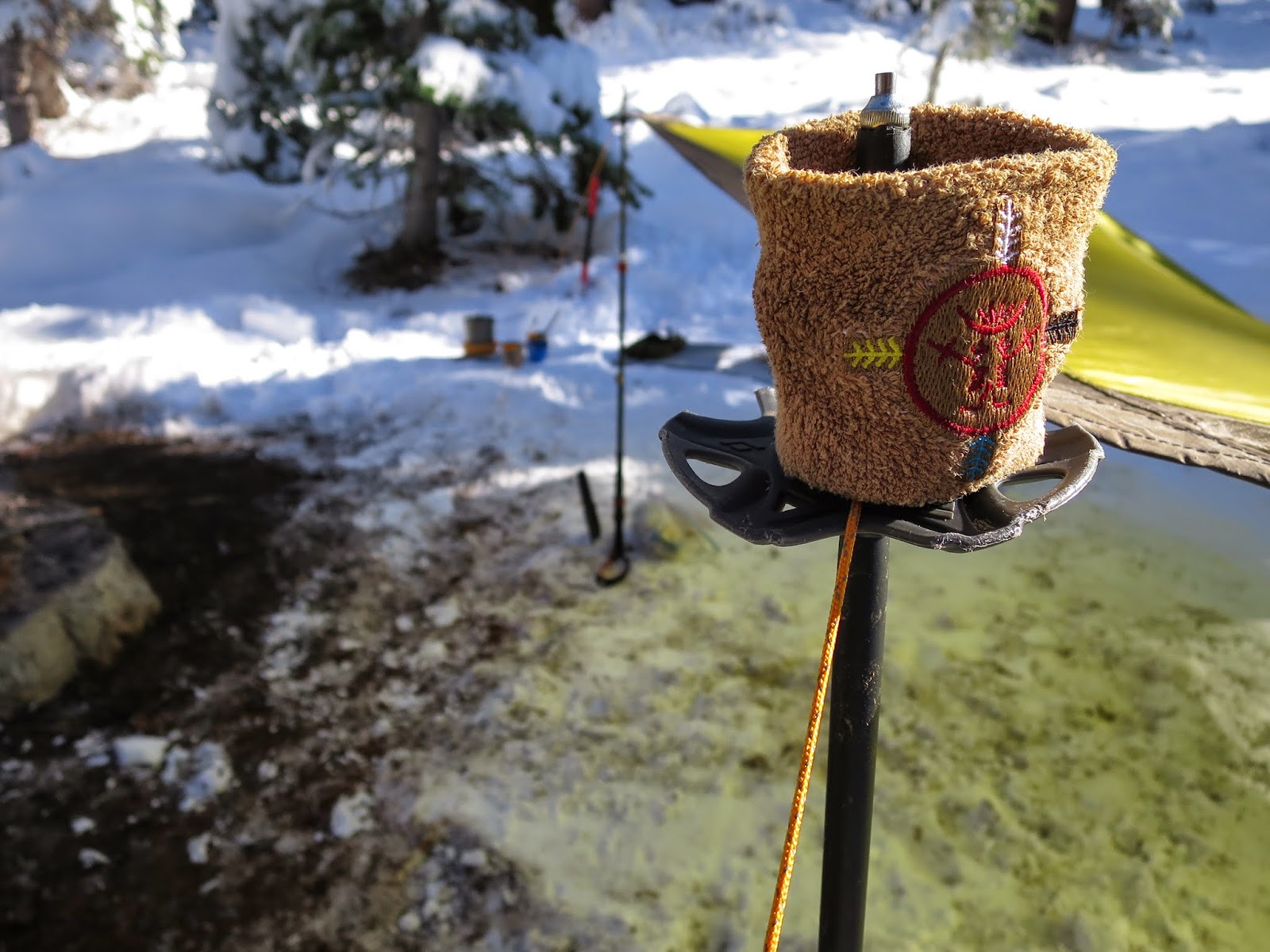
As planning efforts continued, I decided that we could benefit from something special that would keep us all mentally on track and focused. The result was a morale patch. We put our heads together and came up with some design elements that we wanted to see. The patch would note the team members who attended, the date of the event, a topo map of the destination, a boot print to show it was a foot expedition, and of course the X1 designation. After a few sketches and some redesigns we had a draft that we thought looked great. I had my patch maker in New York put everything together and the results were perfect! 

Following this, I needed to devote some time to begin scouting an area where our group could backpack. I wanted to make sure that what I was planning for the group would in fact be what and where we wanted to be. It needed to be a backpacking trip that would be fun, could present components that would relate to creating a mountain hunting base camp, a travel distance that would be reasonable to hike but not too short, and a little elevation to make the effort memorable. I had the perfect place in mind. It would be a little over twelve and a half miles of hiking with an elevation maximum of just below 8,000 feet. Next, it was time to ensure that my scouting partner was prepared to backpack with me. That lucky assistant was my wife.

We began by training during the day and night in a manner that would assure she would be comfortable with a full pack for a hike of that duration. As our training continued, we slowly began to shift to training and general recon by spending time in the area we planned for X1. Since some of this would be during deer season I assured that I had a deer tag just in case. That aspect never materialized but better safe than unprepared.


Our first recon to the X1 destination was a backpacking trip at the end of September. The weather started out fine but became unsettled. Unfortunately, during the mid-way point on our hike in and during our camping days we had lots of rain, sleet, and the occasional snow flurries. The snow was not sticking but the weather was not what most would have ordered.


The photos below are from the second recon trip in mid-October. The weather was absolutely perfect. This was quite a contrast to our first trip to the area. Winds at night gusted over 50 miles per hour just to keep things interesting.


The third and final recon trip occurred on November 1st. We knew that a significant snow storm was expected and thought it would be fun to challenge ourselves a little on the trail and while camping. We had a great time snow camping and it allowed me to share some of the tricks I have learned over the years.


Finally, with the storm window likely to close, we decided to pull the trigger on November 8th for X1. Unfortunately, only a few who had originally wanted and planned to attend were able to do so. Even my friend, for whom this was originally planned, had duty call which resulted in a work scheduling conflict. The U.S. Air Force and our nation needed him and we truly missed his presence. So it would be three of us making our way to our destination; Brent, Kyle, and me.


Our trip started out at a predetermined rallying point where we collected and loaded our equipment. Our friend who was called to duty swung by to see us off. After loading up we headed out for a delicious breakfast. While eating breakfast it was decided that we needed to make a quick stop for a forgotten item. After a dash into a local Walmart we were on our way!


After a two hour drive we arrived at the trailhead. Gear was sorted out, boots were put on, and the adventure was underway. On the way in to what would be base camp, we spent our time enjoying the sights and taking pictures. We had perfect weather with remnants of snow on the ground from the week prior. 


Once we arrived at our intended destination it was time for the usual tasks. Tent sight selection was nailed down, tents were erected, ground pads and sleeping bags set-up, water was purified, and firewood was gathered. While gathering firewood we heard something rustling in Kyle’s tent. It was a rogue chipmunk making himself at home. While checking out the tent Kyle was charged by the chipmunk and in the face of obvious danger managed to only scream moderately. Some off it was captured on film. The video is ridiculous. We finally managed to chase the chipmunk out of the tent without injuries to us, him, or the tent. Once the camp work and chipmunk control was out of the way it was time to watch Kyle catch dinner. Beautiful Golden Trout were on the dinner menu!


As night fell we hauled the fruits of Kyle’s labor back to camp, started a fire to warm up, and began to prepare the grill for some delicious food. Brent, who is forever the planner and cook, brought a couple extra treats along for the group just in case. Two Ribeye steaks (I brought a third as well), baked beans, cubed potatoes with vegetables wrapped in foil, and a mini-keg of Heineken. For my friends reading this from Australia and New Zealand, Ribeye is the same as a Scotch fillet. I am the first to admit that I am a Bitburger or Warsteiner beer guy but I forced myself to raise a couple of titanium mugs of the Holland brewed concoction known as Heineken. I have to admit it was tasty. 


Oh, I forgot to mention that Kyle did not catch any fish for our meal. It was not for a lack of trying but the fish would not cooperate. Because Brent hauled all of the extra weight along for our culinary enjoyment we decided to give him a nickname that would reflect his notable characteristic. We now call him “The Sherpa Porter.” The name was not meant to detract in any way from the actual ethnic group, Sherpa mountaineers, or Sherpa porters. We just felt it was fitting because of the enormous load and his endurance.


As the fire crackled and warmed us we began sharing stories and enjoying our friendship as usually happens when a fire is involved in camp. Once the fire was hot enough we pulled some coals to the side and started cooking the steaks and other items. Let me say that I have eaten more steaks over my lifetime than I probably should admit. I have eaten them in the finest restaurants, during backyard gatherings, and at home. I think this just might have been the very best one of them all.


After dinner we relaxed for hours by the fire and I began preparing mentally for the plan I had concocted. I often use bear canisters with a bear bell attached for storing food around camp. On this trip I decided to use bear bags with bear bells attached. I mentioned to our group how we had seen bear sign on the first two scouting trips and should probably secure everything in the trees. I had Brent and Kyle help me with the task so they were aware of the bells but not my plan. 

My plan was to run fishing leader through my tent door, under the vestibule, up to a branch below the bear bags, and attach an extra bear bell that I had brought along. I was also planning on placing a stuffed black bear next to the tree. The stuffed bear was currently hidden in my pack. When the time was right, I would begin lightly ringing the bell a few times. Whoever decided to crawl out of their tent to confront the beast would be awarded the stuffed animal, the bell, and a Diizche Safari Adventures company patch.

When everyone was almost asleep I set my plan into motion. At first I could not get the bell to ring when I pulled on the fishing leader but patience and persistence finally paid off and the bell jingled. After a short wait I rang it again lightly. After a few more minutes passed I gave it a louder and final ring. Every time I rang the bell I had to hold back the laughter that was trying to explode from within.

Following the third ring Brent said softly, “Shawn did you hear that?” I could hardly contain myself at this point. Brent continued, “It was the bear bell, I heard it three times!” I was ready to scream at this point. Trying to sound serious and somewhat sleepy I said, “Does anyone want to take point on that and check it out?” Kyle responded, “I will check it out.”

I could hear the very slow and quiet noise of his sleeping bag opening and then the slow methodical opening of his tent door zipper. Then all was quiet! After a moment I shouted, “Kyle, can you see a bear out there?” Kyle began laughing loudly, “Yes I can see a black bear out here.” I jumped out of my tent with a camera to present Kyle with his well-earned prize for displaying bravery and calm in the face of an apparent camp intruder. After the pictures were taken Kyle mentioned that he was not sure what he would see outside of his tent. When he unzipped the bottom of the door out came a flashlight with a handgun slowly scanning and as we say, "slicing the pie" until the intruder was safely located and identified. Even in humor we often find a pearl of wisdom. This is a good reminder that how we train is how we will react.


After joking around for a little while we headed back to our sleeping bags and got a good night’s sleep. The next morning Kyle gave the fish another try but they would not cooperate. The trout breakfast menu was modified to dehydrated backpacking fare but the coffee was still French press brewed. After enjoying the mountain morning we put out our campfire and began the hike to the trailhead.


We had a great time together during our short backpacking trip. We made some great memories and made our friendships just a little bit tighter if that is possible. After we got to our vehicle and drove back to “civilization” we decided to fill our bellies with In-N-Out Burgers and fries. We are looking forward to the possibility of our next outdoor trip together. I am making it a point to allow more time for those “let’s do this just for fun” moments. After all, life is too short not to!