Sunday, April 3, 2016

Cecil's Law and EU Declarations - What Is the Risk, Where Is the Truth?

(Photo-Vince O’Sullivan/Flickr)
Cecil's Law and EU Declarations - What Is the Risk, Where Is the Truth?
Written By John J. Jackson III, Conservation Force Chairman & President
(posted April 2016)

By Regina Lennox

How much of a threat are two recent efforts to ban hunting trophies in Connecticut and the EU? Here, we evaluate the attacks, describe their proponents, and refute the lies on which they are based. To clarify the conflation of legal hunting and poaching, we offer 25 reasons why hunting is not like poaching. (A citated version of this list is available on our website, www.conservationforce.org.)

No attack on hunting can safely be ignored. There has been too much negative press and unsubstantiated criticism. But from a legal perspective, these attacks are low risk and do not threaten to close hunting. Do they carry weight in the court of public opinion? It is harder to say. Therefore, we must take every chance to explain the benefits of regulated, sustainable hunting and not to allow any attack, even a weak one, to spread misinformation.

Cecil's Law
The first attack seeks to ban the import, possession, sale, and transport of hunting trophies and products of African elephant, lion, leopard, and black and white rhino in the state of Connecticut.

The bill, named "Cecil's Law," was introduced in February and is pending in the Legislature's Environment Committee. It was drafted by animal rights group Friends of Animals (FoA). Although this bill has a limited potential impact, any law that prohibits the import or possession of legal trophies is a threat.

FoA's press release claims Cecil's Law only targets hunting trophies. That is false. The bill prohibits import, possession, sale, or transport of "big five African species." It defines "big five African Species" broadly, as "any specimen" of African elephant, lion, leopard, and rhino including any live or dead parts or products.  The only exceptions are grandfathered specimens for which the owner obtains a certificate of possession, distribution of grandfathered specimens to a legal beneficiary or heir; nonprofit museum collections; and specimens passing through the state with a permit from another state, which do not exist.

Cecil's Law is illegal. It is "preempted" (overridden) by the ESA, which does not allow states to substitute their judgments in place of those by Congress or the US Fish & Wildlife Service (FWS). When FWS issues a permit, a state must respect it.  Courts have voided state laws that banned commercial trade in elephant products authorized by FWS regulations.  We would expect a similar outcome here.

FoA
FoA is an animal rights group opposed to hunting and wildlife management. FoA opposes the "concept of animals as resources for human beings" and international trade in wildlife. Its website defines hunting as "a deceitful and unnecessary act … for purely gratuitous reasons … unethical, socially unjustifiable and ecologically disruptive."

Conservation Force is litigating against FoA to defend two permits for black rhino trophies from Namibia: imports FWS found enhanced the survival of the rhino. The hunts contributed $550,000 exclusively for black rhino conservation and protection. Yet FoA sued to rescind the permits and stop FWS from using the ESA's enhancement provision as a positive tool for conservation.

FoA also sued the State and Interior Departments over the sale of 22 live elephant from Zimbabwe to China. Although FoA's complaint frequently referred to "baby elephant," photos and Zimbabwe's wildlife authority confirmed that they were sub-adults, not "babies." In July 2015, the Secretariat confirmed the sale was permitted under CITES. Conservation Force represented Zimbabwe and was to intervene when the case was voluntarily dismissed.

FoA admits it is trying to "end the importation into the US of trophy hunted animals by 2020."

Anti-Hunting Declaration in the European Parliament
In January, a proposed Written Declaration on trophy hunting was filed in the European Parliament calling on the European Council and Commission "to examine the possibility of restricting all trophy imports."  The Declaration does not pose a legal threat, but its anti-hunting emotion should be of concern to those who support sustainable use.

The Declaration cannot stop hunting or imports. It is not a law. It is not binding. It is only a request, in this case for an "examination" of hunting. If the Declaration receives signatures from half the Members of the European Parliament, it will be sent to the Council and Commission. But it seems unlikely to succeed: it has only 78 out of 376 signatures so far and will lapse on April 18 if it does not get the rest.

The Declaration should not be adopted as it makes an end-run around the EU Scientific Review Group (SRG). Like the FWS, the SRG makes findings on the sustainability and benefits of hunting programs which guide EU members in issuing import permits. The SRG imposes high standards on range nations, and those standards must be respected by EU members.

The Declaration is legally without teeth; however, challenges or criticisms of hunting at this level should worry all. FACE and other pro-hunting groups in Europe are monitoring and opposing the Declaration. So is Conservation Force.

Born Free
The Declaration is masterminded by Born Free Foundation, a British animal welfare group.  Born Free was founded by the stars of the movie Born Free. It has grown incredibly, raising £3.8 million income in 2015. Born Free's President is President of the Species Survival Network, a coalition of about 80 animal rights groups, including HSUS.

Born Free uses its substantial assets to fund scientific research, including research by the lead author of the 2015 IUCN Red List assessment for African lion. Born Free is a formidable foe due to its resources and reach. Its website states it will "never forget the individual" animal, and also states Born Free's position against sport hunting.

The List of Lies
The following list summarizes the inaccuracies in Cecil's Law and the Declaration, and explains the reality below each lie. A list of references is available on our website:

1.       "Trophy hunting is a cruel and cynical business" and "brutality."
Safari hunting is not a "cruel business." Death by bullet is much quicker and less brutal than death in the wild.

Good operators are stewards of their areas. For example, Bubye Valley Conservancy reinvests the revenue from hunting in conservation, and its efforts have paid off in the largest population of black rhino in Zimbabwe (the third largest in the world), and important populations of cheetah, wild dog, and 500-plus lion. Hunting is the conservancy's only source of revenue. It pays for those black rhino, lion and other species. That is not cruel or cynical - it is conservation.

2.       EU members do not follow rules that require a demonstrable positive conservation benefit for import of game species.
The SRG is responsible for evaluating whether the hunting of protected wildlife (including elephant, rhino, and lion) is sustainable and benefits the species. The SRG meets often. It dialogues with range nations. In 2015, it closed the import of elephant trophies from Tanzania, but opened imports from Zambia because Zambia showed it had a stable elephant population, updated management plan, and community benefits program. In other words, the SRG did its job. Most EU members do their jobs and follow the SRG's opinions. Criticism of this stringent process is unwarranted.

3.       Trophy hunting puts the world's "wonderful wildlife" at risk.
The greatest threat to wildlife in Africa is loss of habitat due to human population growth. Hunting areas provide at least 1.3 million km2 of habitat, countering the threat and transferring the cost of combatting encroachment to the private sector. That alone is a significant benefit to "wonderful wildlife."

4.       US hunters kill too many animals. "Trophy hunters rob the rest of us of our shared wildlife heritage."
Hunting has restored game and protects it. Hunting areas offer extensive habitat and serve as buffers for national parks, creating conditions for wildlife growth. Much hunting occurs on private land where wildlife is owned by individuals and cannot be "stolen" from the public. In South Africa, privately owned game far exceeds that in national parks. Private ranches are responsible for recovering species like the white rhino and bontebok.

Hunting offtakes are sustainable. Most game taken is abundant and not at-risk; e.g., 96% of game hunted in South Africa is common or abundant.  Offtakes of listed species are low. South Africa's elephant quota is 150 bulls. Namibia's is 90. Tanzania's is 100 in a population exceeding 40,000. And utilization is almost always lower than that. In Tanzania in 2014, only seven bulls out of 100 were taken. The same for lion: in 2015 in Tanzania, only 39 were harvested, and the utilization in Zimbabwe in 2015 was 39/85.

These low numbers do not threaten populations - as the CITES Parties recognized when they authorized limited offtakes/exports of black rhino and markhor. The reality is not robbery but more like investment. Hunting operators protect and grow wildlife and take a small dividend from the population to offset expenses. This is a workable model that focuses on and is successful in protecting the species as a whole.

5.       Legal hunting enables illegal poaching.
The press release on Cecil's Law claims "there is growing scientific evidence that the legal trade of trophy hunted species enables illegal poaching by providing poachers a legal market to launder their contraband. One example is South Africa. The country has seen a marked rise in illegal rhino poaching since it began selling permits for trophy hunted rhinos in 2004. Illegal trophy hunting has increased 5,000 percent since 2007." But FoA cites no evidence of these studies. The facts undercut this claim.

The opening of regulated hunting in South Africa led to recovery of the white rhino, from ~100 to 20,000+ today. Although hunting of black rhino in South Africa took place before, export of five black rhino trophies was authorized by a 2004 CITES Resolution. According to FoA, poaching, primarily of white rhino, did not increase for more than three years. That is a weak connection. In fact, hunting has nothing to do with increased poaching; regulated, sustainable hunting is the antithesis of unlawful, unsustainable poaching.

6.       Trophy hunting is nefarious and wasteful.
Antis love the term "trophy" hunting and use it like a curse. But trophy hunting is the same safari hunting that has existed since Teddy Roosevelt. It is nothing more than selective hunting - waiting for a high-quality specimen.

Antis like to imply that trophy hunters cut the heads off animals and walk away. That is false. Hunting ethics prohibit waste, and trophy animals are not wasted. In most cases they provide protein for entire villages. In Zambia, a study found game meat distributions to communities from a small amount of hunting exceeded 6,000kg per year. In Bubye Valley, 45 tons of game meat is distributed annually. Trophy hunters are selective in their harvest but they are certainly not wasteful.

7.       Trophy hunting does not benefit range nation conservation programs. And FWS cannot ensure trophy imports are from well-managed programs. For example, it closed elephant imports from Tanzania and Zimbabwe because it did not have enough information on those programs.
Of course, if FWS closed imports from two countries because it could not find their programs enhanced the survival of the species, FWS was doing its job. Putting aside the inconsistency of FoA's criticism, what do range nation governments say about the value of regulated hunting?

South Africa's Environmental Minister expressed disappointment when the airlines embargoed transport of Big Five hunting trophies. She said: "The legal, well-regulated hunting industry in South Africa is … a source of much needed foreign exchange, job creation, community development and social upliftment." Similarly, in opposing the listing of African lion, Tanzania documented significant benefits from licensed, regulated hunting including: underwriting management and anti-poaching programs; shifting costs to the private sector; community benefits-sharing; and justifying and funding most wildlife habitat. Tanzania confirmed that 80% of its anti-poaching funds come from hunting revenue.

And recently, Namibia's Cabinet directed the ministry to campaign against any proposed bans on hunting and trophy exports. Among other things, the Cabinet pointed to income hunting generates for communal conservancies, private farms, anti-poaching, and wildlife conservation. Thus, according to range nations, legal, sustainable hunting is a key component of their conservation programs and is critical to maintaining wildlife populations. Western organizations who try to stop hunting ignore the range nations, and blind themselves to the fact that conservation costs money. Hunters have paid the bills for years. That truth is confirmed by the source. And it must be broadcast to quiet down groups like FoA and Born Free and shut down initiatives like these.

25 Reasons Licensed, Regulated, Sustainable Hunting (Hunting) Is Not Poaching

1.       Hunting is licensed. It requires a permit and fee. By definition, poaching is illegal.
2.       Hunting is regulated by species, area, season, number, quota, sex, age, etc. Poaching is indiscriminate. Snares do not distinguish species, sex or age.
3.       Hunting restricts methods used, such as prohibiting some weapons or motorized transport. A poacher uses whatever means are available, including poison, without concern for any collateral damage.
4.       Hunting only occurs at certain times. In Namibia and Zambia, for instance, no lion are hunted at night. Hunting has off seasons to avoid disrupting reproductive cycles. Poachers usually hunt during off times and do not care about animal cycles.
5.       Hunting is selective. Poachers do not care and will shoot whatever passes by. Snares do not discriminate.
6.       There are size and age limits for legal trophies. E.g., in Tanzania, elephant tusks must be at least 20kg or 1.6m. Lion must be above a certain age. Similar limits are imposed in other countries. Poachers do not follow any such rules.
7.       Hunting is sustainable because it is quota-based.
8.       Hunting is adaptive. If over-hunting (legal or not) occurs, legal hunting is halted. For example, lion hunting was suspended in 2005 outside Hwange NP due to concerns about the cumulative effects of hunting and problem animal control (PAC). The population recovered rapidly, and regulated hunting was re-opened.
9.       Hunting can be a bio-management tool. E.g., in Namibia, only "surplus" or "problem" black rhino are hunted. Removal of the rhino allows younger bulls to assume dominant positions and may increase reproductivity, or removes an animal that killed other rhino. Poaching undercuts management goals by taking any animal, including females and young.
10.   Hunting preserves habitat - the most habitat. In southern and eastern Africa, ~23% more habitat exists in hunting areas than national parks. That level is far higher in countries where hunting is legal, with five times more habitat in Tanzania and ~three times more in Zambia and South Africa. Hunters protect and police this habitat against the poachers who invade it.
11.   Hunting puts anti-poaching boots on the ground. Hundreds of game scouts are directly employed by hunting operators. In South Africa and Zimbabwe many rhino are privately owned. The high protection costs are paid by private operators.
12.   Hunting underwrites most anti-poaching by governments and communities. It provides the lion's share of funds for government wildlife authorities; for instance, it pays 80% of Tanzania's anti-poaching bills. Returns from hunting operations also pay for community scouts. How can anyone credibly compare it to poaching when legal hunting is the largest source of anti-poaching?
13.   Sharing of hunting fees and revenues, and contributions of supplies and services by hunting operators, creates conservation incentives for the communities most affected by wildlife. They receive significant revenues, e.g., 75% of trophy and permit fees in Tanzania, and 55% of fees directly into village bank accounts and 41% of fees through district councils in CAMPFIRE areas. Clinics and schools are built, boreholes drilled, and infrastructure is developed.
14.   By generating financial incentives, hunting reduces human-wildlife conflict. Human wildlife conflict (HWC) increases if hunting is banned, as in Kenya and recently Botswana. Poaching does not offset HWC because it steals benefits from communities and transfers them to individual poachers.
15.   Hunting provides meat to protein-poor communities. E.g., in Zambia, 50% of game meat must be shared with communities. Bubye Valley donates 45+ tons of meat from hunting. Commercial poachers usually leave the meat of poached animals to rot.
16.   Hunting dis-incentivizes poaching. In Tajikistan, former poachers created a conservancy that generates revenue from markhor hunts. They recognized the hunting offered sustainable benefits compared to short-term gains. The protection from this conservancy and others has increased the number of markhor and at-risk predators like snow leopard.
17.   Hunting recovers wildlife. Witness the white rhino population explosion once private ranchers began to financially benefit from hunting. The same is true in Tajikistan with markhor. Populations recover because legal hunting is controlled and sustainable, and offers a reason to increase numbers despite associated costs. Poaching can decimate wildlife.
18.   Hunters pay the big money that funds habitat protection, anti-poaching, employment, management and surveys, etc. Poachers do not pay the government, property owners, or anyone else.
19.   Hunting generates employment and tax revenue. In some areas it is the only source of employment. In Namibia, which faces 28% unemployment, a ban on legal hunting would cost ~3,500 jobs, mainly on community conservancies. Hunting also spurs jobs in service and tourist industries. These wages translate to spending and tax revenue to support under-resourced governments. Poaching generates no income or taxes and threatens jobs by reducing wildlife populations.
20.   Hunting revenues are the foundation of wildlife authority budgets. Hunters bankroll conservation in range nations throughout Africa. Poachers cost governments by necessitating higher enforcement expenditures.
21.   Hunting is ethical. It is generally based on a fair-chase code. Hunters make every effort to be humane. Poaching is unethical, brutal, and inhumane.
22.   Hunting is not commercial. Trophies are for personal use. Poaching can be commercialized and driven by syndicates and black-market cartels.
23.   Hunting is self-regulating. Clubs and professional hunters/operators' associations have strict codes of conduct. Poachers follow no codes. They are law-breakers by definition.
24.   Hunting is government-monitored. Range nations require the return of forms describing the hunt and harvest. Many require a government scout observe hunts. Poaching is neither monitored nor sanctioned by range nations. 
25.   There is no correlation between hunting and increased poaching. In South Africa, white (and black) rhino hunting took place well before an increase in poaching. Namibia kept poaching in check since black rhino exports began by using the revenue from these hunts. Elephant hunting occurred for years before the current poaching "crisis." As shown here, hunters are the counter to poachers, not the cause.

Saturday, April 2, 2016

Diizche Safari Adventures Offering the LUX-PRO LP 600C-Extreme TAC 600 (Laser Engraved Logo Flashlight)


As requested, we are now selling the LUX-PRO brand of LED flashlight (LUX-PRO LP 600C-Extreme TAC 600). We teamed up with LUX-PRO to bring our laser engraved logo branded torch to our domestic and international clients. This is a great light at a competitive price.

The beauty of LED flashlight technology is that it provides a light source that is virtually immune to failure. We partnered with LUX-PRO to bring you an LED flashlight in a high strength aluminum body with a rubber grip for a secure hold in all conditions. This light comes with our internationally sought-after company logo laser engraved on the flashlight head.

This light is now available and ready to ship! If you would like to learn more just follow this link to our website. Free shipping is not available on this item. International orders will also incur an additional shipping charge that will be calculated prior to shipping. 

Thursday, March 31, 2016

2016 Safari Rifle Challenge World Championships-Coming Soon!


The 2016 Safari Rifle Challenge World Championships are coming soon! The event will be held in Libby, Montana at the Libby Rod and Gun Club. Jay Sheffield is the Match Director and puts on an exciting and enjoyable event. It is always held on the second Sunday in July (07-10-2016). There is a large community fund raising concert every year on the second Saturday so they piggy-back with that to give shooters something else to enjoy while they are visiting Libby, Montana. This year John Michael Montgomery will be headlining the concert.

The shooting event fills-up very quickly after they send notices to the participants on their email group so they don't advertise. If you want to sign up, request more information, or get on their notification list send Jay an email (see below) and he will get you squared away.

Here is an update from Jay regarding the soon to be held 2016 event:

Safari Rifle Challenge
World Championships in Libby, Montana
Sunday July 10, 2016 8am-4pm

The Event: This is a family oriented shoot featuring both life size and moving targets. It is designed to simulate events encountered on an African Safari. Targets will be scored and times will be announced, but since all prizes are awarded by random drawing, you will be competing purely for the glory of sport! Participants will be expected to cheerfully help with reset of targets, powering the moving targets and any other menial labor that may be necessary for the greater good. Shooters must be at least 18yrs old and must be pre-registered. There is a $20 participation fee which will also entitle you to a commemorative t-shirt.

The Guns: This is a big bore, dangerous game rifle shoot. Essentially .375/9.3 caliber or larger in single shot, bolt action or double rifles. If you have an antique double rifle in a smaller caliber that is capable of taking big game then bring it! Single shot, double barrel or bolt action 10/12/20 gauge guns firing single lead balls or slugs will also be allowed. Sorry, but no handguns, lever action, pump or semi-automatic firearms. You will need about 30 rounds. ABSOLUTELY NO LIGHT LOADS!

The Rules: All guns will be placed in the racks with actions open. When it is your turn to shoot, you will be directed to get your rifle by the range master. SAFETY AND MUZZLE CONTROL ARE NON-NEGOTIABLE! The start position will generally be low ready with a round in the chamber, finger off the trigger and the safety on, unless otherwise directed by range staff. A range master “PH” will stay beside you at all times while on the course. On most stages, there will be a limited amount of ammunition allowed in your gun when starting the stage, extra rounds will have to be loaded from the belt, pocket, butt stock etc. We reserve the right to change the course of fire based on our disposition, your disposition, untimely demise of the targets, comments from the peanut gallery, weather or whatever other factors may be present. All distances are approximate and subject to change.

The Course of fire: Shooting positions will vary from standing on your hind legs and shooting offhand, to kneeling and seated. Frequently it will be a combination of positions. Some stages may require the use of shooting sticks which will be provided. Many stages will require you to fire at a target, move to another spot, reload and then fire at a second target. All movement will be done with an empty gun and all reloading will be done once you are safely at the next shooting position. If you have any physical issues that preclude a certain activity we will cheerfully accommodate you.

The 10 stage course is specifically designed to NOT favor any particular style of rifle or sight system. Distances will vary between 5 and 75+ yards. Targets will vary from life-size broadside buffalo and elephant heads to clay birds and water jugs.

Location: Libby Shooting Sports Complex on Farm to Market Rd. across from the Libby Airport.

Time: Shooting starts at 8 am SHARP! Please arrive early to check in and get setup. Remember to bring lawn chairs, hat and sunscreen. A food truck will be at the range if you would like to purchase breakfast, lunch or soft drinks. You are also welcome to bring your own food and drinks (NO ALCOHOL ON RANGE PROPERTY).

Please email safaririflechallenge@yahoo.com to sign up or request more information including local lodging options. FYI, space is very limited!

Sincerely, Jay C. Sheffield Match Director

Here are a few links from recent events in case you might like to learn more:


Monday, March 21, 2016

I Am Conservation


I Am Conservation...Something that might help those who do not fully understand the benefits of lawful managed hunting of elephants.


Monday, March 14, 2016

SCI 2016-Gottfried Prechtl: Prechtl Jagd- & Sportwaffen


During the 2016 Safari Club International Convention I had a prescheduled meeting arranged with my good friend Jochen Hennig and one of his friends. Jochen and I met many years ago in Germany, became friends, and stay in touch regularly. Any chance we have to meet either here in the United States or in Germany is a done deal. Throw hunting or firearms into the mix and we are making plans! Jochen is a racing consultant who is also an avid hunter and connoisseur of fine rifles. I was told the gentleman I would be meeting and spending a little time with was a highly skilled custom gun maker from Germany, which as you might guess also happens to be one of my favorite hunting destinations.

The gentleman, Gottfried Prechtl, is the owner and Master Gunsmith of Prechtl Jagd- und Sportwaffen. As luck would have it we had a chance to share many stories, enjoy a glass or two of wine, some delicious smoked salmon, cheese, and of course discuss his custom manufacturing of quality rifle systems.

I enjoyed learning that besides his gun making skills Gottfried grew-up hunting. He has a background in tool-making and is also a machinist. Those skills led him initially to a hobby of gunsmithing that blossomed and grew into his becoming an internationally known fine custom gunmaker.

Gottfried and his five employees work to produce hunting rifles, sporting precision rifles, and rifles for law enforcement. He also makes actions, gun parts/components, as well as production machines, various gunmaker accessories, and also a Bisley vice in addition to his custom gun making. Many of you may be familiar with his precision Universal Milling Machine and tooling.


Gottfried builds his best quality bolt action rifles on his own Double and Single Square Bridge Prechtl M98 Actions. Additionally, Gottfried also produces a high-strength match action in single shot or repeater configurations for precision target shooters. Specialty models are also available for the tactical law enforcement community.


The Prechtl M98 standard and magnum rifle systems are made based upon the original drawings of Paul Mauser. Gottfried strives to stay true to the original proven design. Working from those drawings, Gottfried has made several changes that have improved upon that original foundation. Things such as extractor length, ejection port modification, square bridge refinements, optimized cocking piece with solid bottom lug for use with adjustable trigger assemblies, firing pin and bolt diameter changes, receiver width modifications, plus bolt and receiver tolerance modifications just to name a few areas. One of his developments, the Prechtl 3-Position Safety with Safety Lock is well known throughout the world.


Available action types include the Prechtl M98 Magnum, Standard, Lightweight, and the Prechtl 07 Express which is a precision Magnum rifle. A new addition is the Prechtl GS-04 Long Range Hunting model designed for hunting conditions more suited to longer distance shots. I had the opportunity to handle a prototype of the GS-04 Long Range in .338 Lapua Magnum that was simply stunning. Other calibers are available along with a variety of options including an adjustable cheek piece. The .338 Lapua I handled has a stated precision of 0.3 MOA with Berger hybrid 300 grain bullets.


Gottfried’s versions of the Model 98 Mauser action design are machined from solid stock. In the Prechtl Magnum action a total of 15 kg of steel is cut and the weight of the finished action is 1.35 kg. The manufacturing process requires 92 hours of machining just to complete an action.


A very popular option in the U.S. Market is the take-down model version of Prechtl rifles. This version accounts for approximately 80% of the rifles built by Prechtl for U.S. customers. The take-down version is available in both the standard and magnum version.


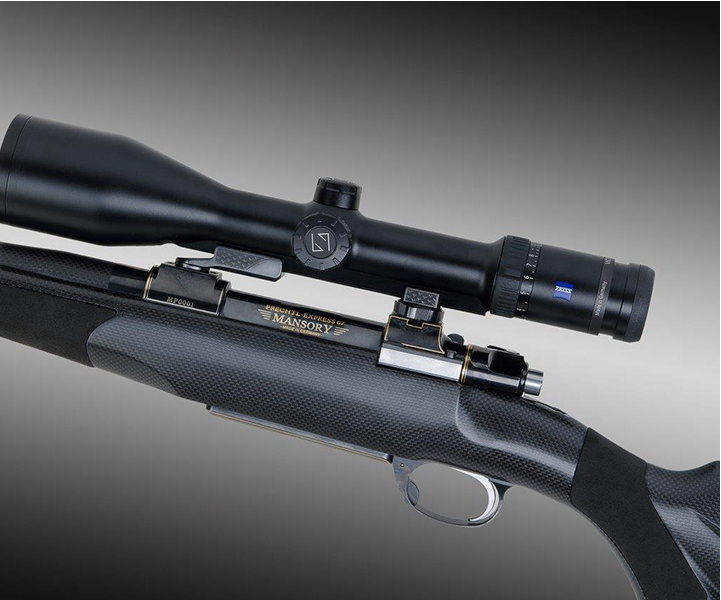
All Prechtl models are manufactured and assembled at his shop in Birkenau, Germany. All actions and rifles are built and hand finished by Gottfried and the other skilled craftsman that he employs. The only rifle component not made in his shop are the barrels. These are made by the German Lothar Walther Company. There is one variable to this and that is the Prechtl-Express 07 Mansory model.


As some of you may know, Mansory is known for making a line of the very best ultralight high-strength carbon cars for manufacturers such as Bugatti, Ferrari, Lamborghini, McLaren, and Mercedes-Benz just to name a few. They have teamed up with Prechtl to create a carbon stock and carbon barrel sleeve paired with selected match grade barrels made by Lothar Walther. All other parts are Prechtl.  


I have many friends living in Germany who are avid hunters. They know of the new Mauser bolt actions that Gottfried makes and speak very highly of his gunmaking skills and craftsmanship. I had the opportunity to handle many versions of his M98 rifles and I must say they are functional works of art. To say his actions are as smooth as glass with triggers that are unbelievably crisp is an understatement. They must be experienced firsthand to be appreciated. I was highly impressed with every model in his rifle line that I handled. Fit, finish, function, attention to detail all superb. His takedown rifle version was extremely well designed and executed.


Why would you want to consider having Gottfried build a rifle for you? Well besides what I have already mentioned consider this as well. The rifles are fully custom and because of this you will have a wide range of options such as stock and recoil pad style, stock finishes, stock fitting, sling swivels, express sights, semi-express sights, no sights, German pivot mount on integral bases, other mounting options, safety and safety lock options, standard or take-down options, magazine capacity options, barrel length & diameter options, integral barrel with quarter rib, and caliber options. There are many other options that are available such as custom engraving by some of the best German engravers as well as finish options such as color case hardening for example. This list is incomplete but it serves as an example of the variables that are tailored to your specific needs or desires.


Gottfried’s company philosophy and objective are simple. “There is nothing that cannot be made even cheaper… but there is also nothing that cannot be made even better. The wheel does not have to be reinvented, the wheel already exists.”

“Our main activity is manufacturing quality systems for repeater rifles in standard and magnum versions, sport weapon systems in standard and magnum sizes and both single shot and semi-automatic, as well as hunting, sporting and police weapons from systems produced by us. Compensators for rifles and shotguns, match triggers, weapon parts and rifle maker supplies are also the object of our production. Repairs of all kinds to hunting weapons and large caliber sporting weapons are carried out reliably in our quality workshop.”


So there you have it! A snapshot of Gottfried Prechtl, the owner and Master Gunsmith of Prechtl Jagd- und Sportwaffen and some of his custom rifles. I am very excited about what I saw and had a chance to handle. I am looking forward to discussing the possibility with Gottfried of a custom driven hunt rifle in the not too distant future.


Be sure to look up Gottfried and pay him a visit if you live in Germany or elsewhere in Europe. If you live in the United States be sure to visit his booth during the next Safari Club International Convention. If you’re in the market for a beautiful custom made rifle you will not be disappointed.

You can also visit the Prechtl website to learn more.

Saturday, March 12, 2016

Black Bear Skinning Time-lapse

A time-lapse view of skinning a black bear. This information has been provided by our friends at Dick’s Taxidermy.


You can view other videos from Dick’s Taxidermy on our Blog video Page or by searching YouTube.

Sunday, February 7, 2016

SCI 2016-Marc Newton: John Rigby & Co.


Every now and then, like the blind pig finding an acorn, we stumble across an opportunity to experience something special in the world of firearms with historical significance and importance. Such was the case for me at the recent 2016 SCI Convention. The circumstances that unfolded were somewhat unexpected and it was a great honor and experience.


I was meeting with my friend Marc Newton at the SCI Convention. Marc is the Managing Director of John Rigby & Company. Marc’s team of London craftsmen had begun working on a .275 Rigby restore and refurbish project of mine a few months ago. As my timeline was not pressing, I had previously asked Marc to move my project to the warming platter while they continued to focus their attention on completing the 2nd of the World Heritage Rifle Series being donated by John Rigby & Company for the SCI’s 44th Annual Hunters’ Convention. Rigby was building a donation piece to celebrate the Indian subcontinent while representing the .275 Rigby and Jim Corbett. Jim Corbett is of course a writer, conservationist, and hunter known for killing man-eating tigers in the Kumaon region.


The World Heritage Rifle Series is a five year collaboration between SCI and premier rifle makers. It consists of five custom built rifles that represent the very best of the gunmaker’s craft. They represent one of the five hunting continents of the Americas, Africa, Asia, Europe, and Oceania. The 1st rifle built in the series was to celebrate Africa and was built by John Bollinger Sr. and Jr. The 2015 auction sale of that rifle raised $140,000.00 USD for SCI projects. The 2nd rifle to be crafted for the series, as shown above, is being built by John Rigby & Company honoring Asia. It is built on a classic single-square-bridge Mauser action with a 25 inch Classic Rigby barrel. The rifle has jungle themed engraving of illustrations taken from Corbett’s books. It was scheduled for auction during the 2016 SCI Convention.

I had intended to meet with Marc, enjoy the beautiful work done on the John Rigby London Best Corbett Commemorative Rifle and perhaps chat some about my build project. I knew that Jim Corbett’s personal .275 Rigby that was presented to him by Sir J.P. Hewett KCSI, Lieutenant Governor of the United Provinces, in gratitude for killing the man-eating tigress of Champawat in 1907 would also be present. It’s worth noting this tigress had killed a reported 436 people. This is the same rifle that Corbett used in 1926 to kill the infamous Rudraprayag leopard that had killed more than 125 people.


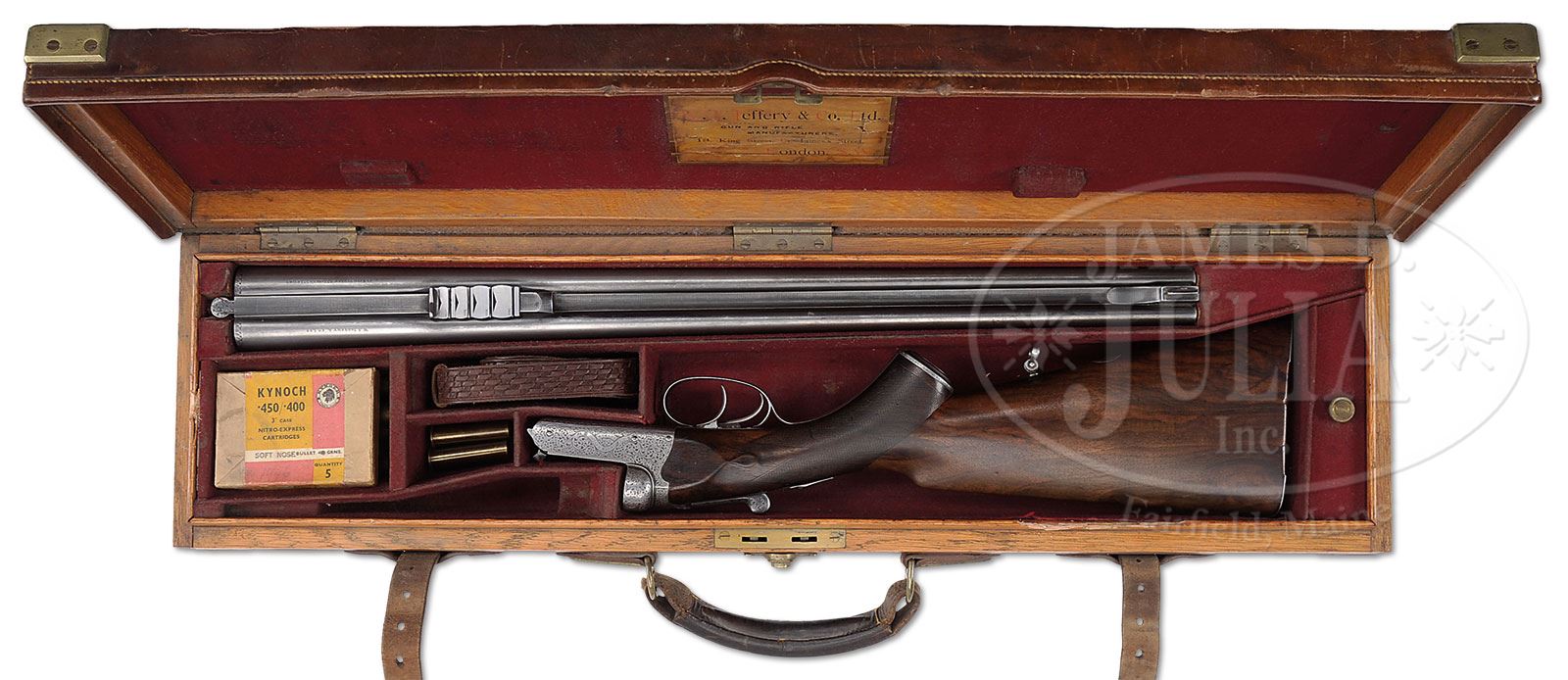
As luck would have it I would not only have the opportunity to lay my hands on Jim Corbett’s personal .275 Rigby but also another of his fine personal rifles. While chatting with Bill Jones he asked if I would like to handle Corbett’s .450/400 double rifle. This rifle was used by Corbett in Africa and India. It had been used to kill many man-eating tigers for the Indian government. It was also used to kill the Thak man-eater shot by Corbett in 1938, the last man-eater to be killed by Corbett. As a smile tore across my face with a rush of excitement I of course could hardly contain myself. The display case had already been opened and the Jeffery boxlock was resting in my hands before I could wipe the silly grin off my face.


While rifles are a tool made from a piece of wood and steel being able to see, feel, and hold history in your own hands is something that is always difficult to describe. It is an experience that never dims and is always one that I never forget. This was one of those moments for me as I rubbed the stock, caressed the action and barrels as if they were alive, and threw the rifle to my shoulder and looked over the sights. A sight picture and experience that will be forever ingrained in my memory. It is something that I wish everyone could experience. I snapped a few pictures to photographically capture the moment with the .275 Rigby and the Jeffery .450/400 double but the photos do not do the experience justice.


The Rigby booth was alive and active during the convention. Rigby did a spectacular job presenting their work and hosting those who stopped by their booth. I received word that the auction for the John Rigby London Best Corbett Commemorative Rifle was a success. The rifle sold for $250,000.00 USD at the 2016 SCI auction where it was jointly purchased by husband and wife Brian and Denise Welker. The rifle was auctioned with a best-quality English leather case and accessories, a beautiful credenza built by Julian and Sons, a set of Corbett books commissioned by Rigby, and an original oil on canvas by David Southgate of the “Last Moments of the Champawat Man Eater.”


A very successful convention for John Rigby & Company and all those who were a part of the event. Jim Corbett National Park in India will be receiving a donation from the proceeds of the Corbett book sales. Rigby purchased the painting from Mr. Southgate who will be donating proceeds from the sale to tiger conservation in Jim Corbett National Park.


The picture above is of Noel Maxx artistically posing with Jim Corbett's rifles at the SCI Convention Rigby booth. Noel is holding two of Corbett’s wonderful and well known rifles. The rifles are the Jim Corbett W.J. Jeffery boxlock in .450/400 3” used to kill many man-eating tigers and also the .275 rifle Jim Corbett was presented for shooting the man-eating tigress of Champawat by Sir John Hewett. This rifle also accounted for many man-eaters by Corbett. Noel is a huge fan of Jim Corbett and Rigby and came in touch with Marc Newton of John Rigby and Company.  Noel lives in Texas and is a hunter conservationist.


Another treat for those who stopped by the John Rigby & Company booth was the opportunity to see the debut of the Rigby Rising Bite double rifle. Production of this double had stopped in 1910 due to the rising cost to manufacture the rifle. Rigby has now resumed building this iconic double rifle.

Special thanks and recognition:

Ryan Harris, Owner of Global Safari Films. Ryan operated our camera to capture several images on our behalf. http://globalsafarifilms.com/

Various Jim Corbett .275 Rigby & Rigby Rising Bite close-up photos and auction winner photo courtesy of John Rigby & Co/Copyright John Rigby & Company, London, England, http://www.johnrigbyandco.com/

Auction photos Jim Corbett Jeffery .450/400 NE close-up photos courtesy of James D. Julia Auctioneers, Fairfield, Maine, www.jamesdjulia.com