Sunday, May 26, 2013

~Heym Challenge 2013~


Review of the 2013 Heym Challenge

With Special Guests

Mark Sullivan and Peter Dafner

Professional Hunters
Graeme Wright and David Little with a Competitor at the Leopard Station
The 2013 Heym Challenge has concluded and once again the annual Heym event was a great success. Participants came from around the world to participate in and experience the two day extravaganza. The event was very well done and seemed to be enjoyed by all. This year’s event was the second annual event conducted by Heym. Planning has already begun for the 2014 event which will also be held in Germany.

This year the event was sponsored by Kynoch, Jagdfieber, Schanz Messer, Leica, Jagdzeit International, Classic Gun Magazine, Jagen Heute, and Sax Munition. The Heym event consisted of a shooting competition on April 20th known as the “Heym Challenge“ and also a factory tour day on the 21st at the Heym Gleichamberg factory. Day one started off early at the Schießzentrum Waffen Albert – Pulvertoni also known as the Waffen Albert shooting range in Schweinfurt, Germany. Anton Albert is the manager of the range facility and did a fantastic job preparing the facility for the shooting event.

Waffen Albert Shooting Range

The Waffen Albert Range is a state-of-the-art indoor facility. The main floor consists of a large conference style hall with a small food and drink area available for the attendees. The shooting competition required a registration fee for those who wished to compete. With the first place prize being a beautiful trophy and a Heym Model 26 double rifle there was no shortage of interested competitors. Last year I had the opportunity to shoot a scoped Model 26 on the shooting range for the first time. It is a beautiful over and under double rifle in classic German style. I found it to be a very lively rifle with fast pointability and excellent accuracy. The winner of this fine rifle would be in for a real treat!

Mark Sullivan and Shawn Joyce Scoring a Hippo Target


FBM's Range Safety Briefing
Last year, I competed in the shooting event as a guest and found it to be a very exciting competition that was also great fun. This year, Heym asked if I would mind working on the range assisting my good friend Mark Sullivan. Mark and I conducted the Hippo shooting competition and had a great time together working with the competitors that moved through our range station.  We also worked the elephant shooting station together. There were many great shooters present but also some new and less skilled shooters that were learning about big bore bolt action and double rifles. All were made to feel welcome and encouraged to enjoy the competition and learn about Heym’s great rifles.


A Competitor at the Going-Away Elephant Target


Mark and Shawn Score the Frontal Elephant Target Shot by Dr. Johannes Traumann
All competitors were required to use Heym rifles. They could bring their own Heym or they could use any of the wonderful rifles that were manufactured and provided by Heym. Bolt action and double rifles were available and ranged from .375 H&H through .577 Nitro Express. I am fortunate to have had the opportunity to shoot a wide variety of Heym rifles over the years. This event allowed all that attended an opportunity to handle and shoot a variety of these great rifles first hand on the range.


There were numerous range event stations such as balloon shooting, distant and charging daylight leopard, distant and charging dry ground hippo, alert and fleeing elephant shooting, life-sized big five computer simulated shooting station with jumbo screen display, and a theoretical and practical PH test station. The computer simulated station and PH test were a new dimension for the competitors.
 

The PH test required competitors to show their knowledge about judging animal weight, distance to targets, trophy measuring, describe various aspects about ammunition, and finally a test about African game animals. All of the stations were enjoyable. There was a short break in the shooting day to grab lunch that was made available at the range. After lunch the competition resumed until all shooters completed all of the stations.

Computer Simulation Station

PH Test Station
Tabulating the Results

Immediately following the competition the scores were tallied to determine the winner. After all was done Jacobus Wright was announced as the first place winner and recipient of the beautiful first place trophy and of course the Heym rifle. Tim Schönig was the second place winner and received a beautiful trophy along with a custom knife valued at 800 Euros. Christian Pfitzmaier was the third place winner receiving a trophy and digital camera valued at 500 Euros. The top five competitors at the 2013 Heym challenge were:

1. Jacobus Wright
2. Tim Schönig
3. Christian Pfitzmaier
4. Ulf Thiele
5. Dr. Johannes Traumann

Awards Table

Heym CEO Thomas Wolkmann Presenting to Competitors


Every participant in the shooting event received a prize that they were allowed to personally select from the prize table. A variety of items were present from art to ammunition.

Heym .577 NE Sidelock Being Demonstrated

A side program was conducted at the range that was enjoyed by shooters and spectators alike. Mark Sullivan conducted a live demonstration on using safari rifles while hunting dangerous game up close. Those that expressed interest were also able to shoot a prototype of the new Heym boxlock .577 NE.
 
Prototype Heym .577 NE Boxlock

This is a fantastic double rifle that we will be hearing a great deal about in the future. Balance of this boxlock is exceptional and everyone who handled and shot the rifle had great things to say about it! The rifle will also be available in .500 NE. What seems to be making this rifle standout is the balance, optimized weight, and handling. These attributes coupled with the 1920’s Holland & Holland style stock design development are being noted as a winning combination. The feel of this rifle is noticeable and was well commented upon. A sidelock version is also available. 
                                                                                        

4 Bore on the left and the Heym .577NE on the Right
Another interesting presentation was the .577 NE and 4 bore demonstration! Three large blocks of wood were set-up on the range. The blocks were approximately 8-10 inches thick, three feet wide, and five feet tall. They were placed in a straight line from the back of the range to the shooting line and separated a few feet apart. A target of an elephant was placed on the front block.


The idea was to create an informal graphical Taylor Knock-Out (KO) Value display, some visible display of knock-down power, and to a much lesser extent penetration. The Taylor KO Value is sometimes mistakenly thought of as killing power. The three wooden blocks would graphically display the reaction to a faster “smaller” .577 NE and bigger, heavier, and slower 4 bore projectile.


Of course another aspect of the demonstration was to present the Heym .577 NE and the 4 bore purely for enjoyment by the spectators. It showed how far things have come from the days of black powder to modern smokeless powder as presented in the Heym designed .577 NE Mark Sullivan Edition. Those who have hunted with the .577 NE understand how effective this cartridge is on dangerous game.

The .577 NE went first. The blocks remained standing but the bullet tore through all of the blocks with ease.  Next it was time for the 4 bore. The firearm for this demonstration is owned and was brought by Patrick Beyeler. Now if you have not seen a four bore they are an ominous sight. The physical size and heft of the rifle alone is jaw dropping. When you see the massive rounds dropped into the action it makes anyone with any sense at all want to take at least three steps back from where they were previously standing on the range.

Cartridge Comparison (left to right) 4 Bore, .600 NE, .577 NE, 4 Bore Bullet


When the trigger was pulled an indescribable cloud of smoke and flame erupted with a concussion and recoil that one would expect from a small cannon. The two massive wooden blocks toppled over from the impact of the large lead projectile.

The bullet was stopped by the last block of wood and did not penetrate the final block. There were actually a couple people that raised their hands and expressed a desire to have a go at it. I immediately ran to the nearest exit and tried to act like I was busy doing something else. I got caught before I made it to the door and was “encouraged“ to give it a try. I have enough problems associated with shooting big bores that I have to constantly work to minimize and overcome. I could not imagine how pressing the trigger of a 4 bore might help me with those challenges so I politely passed.
Following the shooting event, award ceremony, and shooting demonstration everyone made their way to an after function dinner. After an evening of good food, singing, and socializing everyone headed to bed thinking about what exciting moments the next day would bring during the Heym factory tour day.

Heym Gleichamberg Factory

Day two started at the Heym factory located in Gleichamberg. The attendees were divided up into manageable sized groups and were each escorted through the factory for employee guided tours. Every step of the manufacturing process was observed and explained during the tour. The tour started with the arrival of rough materials through the presentation of a completed rifle to the client.

The tour offered an opportunity for interaction and discussion with the actual trades-person in their work area while they were performing their skills. Everything from barrel making, hammering the barrel, gun assembly, soldering double rifle barrels, parts fitting, stock wood selection, stock making/fitting, regulation, and of course finish and engraving. Being able to personally meet with engravers and view their work was a bonus.


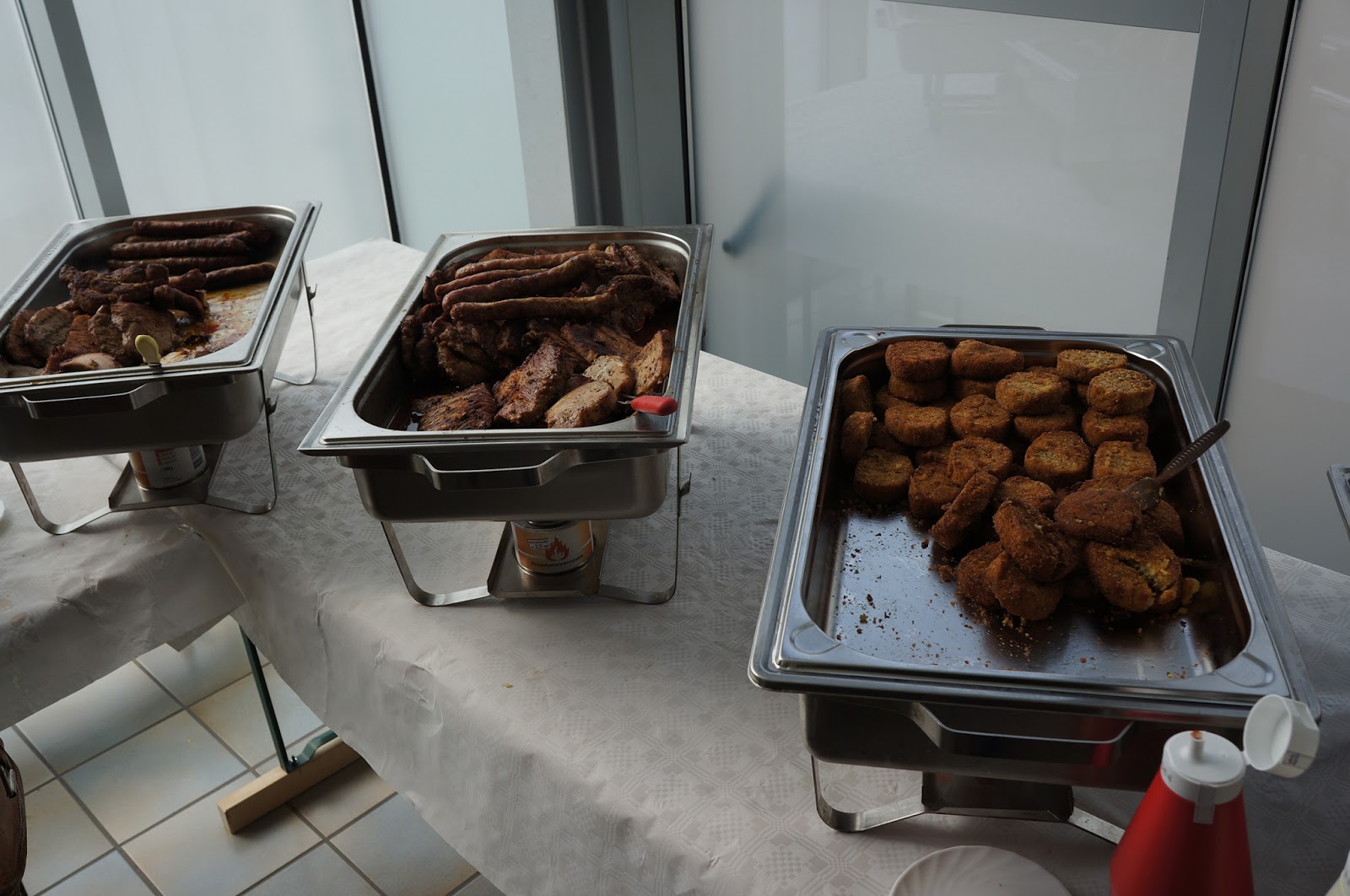
Following the factory tour a delicious barbecue meal was prepared at the factory along with other great German dishes and desserts. The food was excellent and the spirit of friendly good-fellowship was ever-present as it was during last year’s event! After the delicious lunch the large group assembled in the Heym conference room for the professional hunter presentations and Kynoch presentation.


Prior to the lectures several award presentations were made by Thomas Wolkmann on behalf of Heym to those who helped support and promote the event locally and internationally. Kind words, certificates, and Heym medals were given to the recipients. They were greatly appreciated by all who received them. Following the award presentations made by Thomas Wolkmann, three lectures were made by the guest speakers.


Peter Dafner presented regarding his 2012 hunting season and also on hunting in Uganda. Peter also shared an experience regarding a close quarter lion encounter. David Little of Kynoch and Graeme Wright, author of the classic: “Shooting the British Double Rifle,” presented for Kynoch and discussed various ammunition topics and myths. Mark Sullivan presented on Hunting in 2012/13 with his Heym sidelock and discussed shooting at close distances. 


The presentations were narrative but also included audiovisual presentation. Mark’s presentation also included a demonstration which he provided. Questions were fielded from the audience following each presentation. Both Peter and Mark mingled with the attendees and were available for personal private discussions following the group presentations. Mark and Peter also provided photo opportunities and autographs to the many attendees who asked for them.
 
Peter Dafner and Mark Sullivan Having Fun on the Range
The Heym event was many things to different people. It was a fantastic competition with an extraordinary and personal tour into the manufacturing process of these rifles. The event also allowed those present to have an opportunity to get to know the professionals who use these rifles daily in their jobs. An unexpected bonus was the opportunity to interact with a very diverse group of people from around the world and to make many new friends. My wife and I thoroughly enjoyed the hospitality extended by Thomas, Jacqui, Manfred, Bernhard, Frank, and all the employees at Heym.


There Were Many Displays and Booths to Explore at the Event

The executive staff and workers at Heym did a great job with this event. My wife and I are looking forward to seeing everyone again soon. Thanks for making us feel welcome and part of the Heym family. If the 2012 and 2013 event are any example, anyone considering attending the 2014 Heym event will have a great time. 


This year’s competition had eighty regular plus twenty VIP shooters and approximately one hundred spectators. Nearly three hundred attended the factory tour day. The prior year’s competitors numbered fifty-one and the prior year’s factory tour participants numbered one hundred thirty-four. The event is obviously growing but it continues to remain a personal group that feels very inviting. Next year’s event promises to be just as exciting and well attended.


I enjoyed seeing how these fine firearms are manufactured. I know that Heym makes fantastic rifles that reflect outstanding attention to detail and craftsmanship. After having the opportunity to shoot the Heym double rifles from .450/.400 to .577 Nitro Express over the years, I know they will perfectly meet my needs. In fact I put in an order for the new .577 NE Heym Boxlock.


I am looking forward to attending the next Heym event, seeing my new and old friends from Germany and Europe, hunting for Roe buck again, and maybe just maybe picking up my new Heym double. I hope to see you in 2015 during the Heym 150th anniversary event!
 

Monday, March 25, 2013

Timbavati Private Nature Reserve Announcement

File Photo:Timeslive-The Times 2012-12-13. Image by Daniel Born

Issued by the Chairman, Tom Hancock
Date: 21 February 2013

The Timbavati does not support the idea of stopping an activity which is legal, sustainable, scientific and professionally managed, supported by numerous conservation-oriented NGOs and research institutions, and which brings in the very revenue required to counter the uncontrolled and highly illegal scourge that is rhino poaching. For the Timbavati to be financially sustainable and for us to achieve our conservation aims and objectives we need sustainable sources of revenue whether it is from limited hunting, photographic tourism other sources.

Individual landowners do not benefit financially from any hunting which takes place in the Reserve and are prohibited from hunting commercially on their own properties. The Timbavati Association is a not-for-profit conservation organization.

100% of the proceeds generated from sustainable hunting activities in the Timbavati are utilized exclusively for the conservation and protection of not only our rhino population, but also the protection of all fauna and flora under our custodianship.

Sustainable utilization of our natural resources as practiced by the Timbavati is legal, well supported by environmental legislation, government, and SANParks as well as by a large number of reputable, relevant research institutions and conservation-based NGOs [Research available on request]. Sustainable utilization of natural resources by way of hunting is entrenched in the Policy for Buffer Zones to National Parks.

The general consensus of the scientific community and reputable conservation NGOs appears to be against an outright ban on the hunting of cats and rhino. CITES states that rather than trophy hunting having a negative impact on white rhino population, "available information suggests the contrary".

The Timbavati supports the findings of Endangered Wildlife Trust chief Yolan Friedman and Wilderness Foundation chief Andrew Muir who cautioned that a moratorium on rhino hunting could have “unintended and negative consequences which are prejudicial to the southern white rhino conservation as a whole”.

“To allow the continued expansion of rhino range and numbers, and so enable overall numbers in the country to grow… the private sector and communities have to provide the new conservation land. The extent to which they do so largely depends on economic incentives and the perceived risk of managing rhino.”

They conclude that a moratorium on hunting could also result in a drop in rhino prices and encourage owners to remove more of their animals.

IUCN Species Survival Commissions (SSC) African Rhino Specialist Group (AfRSG) (Appendix 4) has over the years recognized the generally positive role that sport hunting has played in the increase in white rhino numbers in South Africa. Hunting of white rhino (WR) started in 1968 when perhaps there were only around 1,800 white rhino in Africa. It helped give white rhino a value on auctions that has encouraged the expansion of numbers and range. Thus white rhino numbers in South Africa have increased over 10 fold since hunting started.

The support for the continued hunting of white rhino is taken up by the man who arguably was largely responsible for saving the white rhino from extinction, Dr. Ian Player. Dr. Player stated in an interview recently that in 1960 it was estimated that there were 60,000 black rhino in Africa and only 600 white. By the end of Operation Rhino (of which Dr. Player played a central role), there were only a few thousand black rhino while white rhino numbers were growing rapidly. Dr. Player commented, “What lead to this, and what people don’t understand – and don’t want to understand - is that in 1970, white rhino were placed back on the hunting list. That meant that game ranchers were able to buy [white rhino] and have hunters come and shoot them and pay a lot of money to do so. To the great credit of the ranchers, they were taking that money, buying more land and buying more rhino. The numbers of rhino shot were minimal, but what it meant was the habitat was being expanded all the time and that literally lead to an explosion of white rhino.”

Thanks to Operation Rhino, it is estimated that there are approximately 4,500 white rhino (or 23% of the world’s population) on 2.2 million hectares of private land in South Africa (EWT). The combined habitat on private land is bigger than the size of the Kruger National Park.

In 1968 the Timbavati was one of the first recipients of white rhino under Operation Rhino. Initially 4 white rhino were introduced and over the next 5 years, we purchased a further 22 from the then Natal Parks Board. In 1994, prior to the removal of the ecological disaster that was the fence between the Kruger and Timbavati, our white rhino population had grown to 67. On removal of the fence we immediately lost 70% of our rhino to Kruger. So the Timbavati helped to stock the central KNP areas with white rhino. As the meta population in the Kruger expanded north, our white rhino numbers slowly recovered to such an extent that we believe we are close to territorial capacity. As we have no fence, all game found in the Timbavati (and the Kruger) is legally classified as “res nullius” or ownerless. Therefore the accusation that we are hunting Kruger rhino, from both a legal and logical standpoint, is absolute nonsense.  To the contrary, by removal of the fence, Timbavati helped to increase white rhino numbers in the central Kruger area.

Contrary to popular belief, according to CITES the overall populations of both white rhinoceros and the black rhinoceros continue to increase in the wild despite high and increasing levels of poaching. White rhinoceros populations now total about 20,165 individuals, and black rhinoceros populations about 4,880.

When it comes to hunting, we will always encounter emotive arguments. Our management team have a duty to put emotion aside to make the best decisions based on the best scientific information available to ensure we uphold our objective to “promote the conservation of biodiversity for the sake of posterity, and to manage its ecosystem, landscapes & species populations to serve the ecological interests of the Timbavati and the Open System”.

My greatest fear regarding the uninformed anti-hunting activists is that their sentimentality for individual species, or even for individual specimens within a species, will have the unintended consequence of the decline or even destruction of certain species in the wild.

There are many animal rights activists and members of the public who criticize sustainable hunting without really understanding the harsh realities facing conservation in Africa. And then you get true conservationists who are involved with saving and protecting rhino all day, every day. The Timbavati is the latter and probably does more to protect rhino than any NGO or other private organization. This comes at huge cost and needs to be paid for somehow.

The Timbavati has one of the most effective anti-poaching units in the world. This comes at a cost.  We have experienced field rangers (who receive paramilitary training), electrified alarmed fences, and vehicles for armed response. In additional there are costs associated with informants fees, fees paid to assist with intelligence gathering, improved firearms to counter increased firepower of poachers and legal fees to represent staff when they are involved in shooting incidents. And we have darted, micro-chipped and DNA-sampled more than 70 rhino in an on-going program to aid law enforcement in curtailing the illegal trade in rhino horn. The list goes on…

When it comes to the war on poaching we are the Western Front. Not only do we protect rhino located within the Timbavati, we also protect a large number of rhino located in the western section of the Kruger National Park (KNP). We are a Buffer Zone to the National Park. The Timbavati works with the KNP on a daily basis to coordinate anti-poaching activities. We are on the ground, all day, every day protecting rhino at huge personal risk to our dedicated field rangers and management. Armed incidents with well-armed poachers are a regular occurrence.

Specialist independent scientific studies are undertaken for each species to be hunted which analyses the impact of any off-take of the species. From the study, a hunting protocol emerges, which dictates how and which individual specimens may be hunted. All animals removed from the Timbavati through hunting have to be under permit issued by the provincial conservation agency, after approval by the Kruger National Park. This is a lengthy and controlled exercise, and should the sustainability of any species, or any sub-group within a species, be under threat generally indicted by a decline in numbers, the process would prohibit the hunting of such species. The Timbavati would never allow hunting of a certain species if there was any negative impact, short or long term.

Dr. David Mabunda, CEO of SANParks recently stated, ''We have a good relationship with the Timbavati Association, and they are excellent conservationists. Hunting in private reserves, contractual and provincial parks is allowed within the framework of provincial legislation and sustainable use of natural resources. This framework means that hunting can only take place if it is based on scientific studies, scoping exercises, aerial surveys and the granting of a permit to hunt by the department responsible for conservation. SANParks scientists and rangers are part of the process that determines [hunting operations]. We have reached an agreement with Timbavati and the other privately owned reserves that border the Kruger Park. This agreement states that the area would be managed according to the management plan that applies to the Kruger National Park. And our policy is open to the sustainable use of natural resources.”

Hunting of iconic species will always be emotive and unpopular to the many uninformed. People do not need to enjoy hunting, or to respect hunters. Rather they need to understand the enormous benefits that hunting – including the hunting of white rhino - brings to conservation, not only in the Timbavati, but to the whole of southern Africa.

Do we have a rhino hunting problem or a rhino poaching problem? We all agree we have the latter but to say that they are one and the same thing is simply ludicrous. Sustainable hunting of rhino is legal, and encouraged by environmental legislation and policy, generates revenue for general conservation activities and rhino protection and, probably most importantly, results in the expansion of rhino habitat and numbers.

We are constantly looking for alternative revenue sources to fund our conservation operations. The Timbavati regards itself as one of the few examples in Africa where photographic tourism and sustainable utilization through harvesting are conducted within the same environment. The Timbavati does not regard these activities as mutually exclusive. Many of our landowners run successful lodges which generate conservation levies, but eco-tourism is not a panacea for all the challenges facing conservation in southern Africa, and the number of lodges that the Timbavati can sustain from an ecological and financial perspective is limited. It is generally accepted by reputable scientists that photographic tourism operations are more damaging to the environment than sustainable, well managed hunting operations. Simple anecdotal evidence from the Timbavati illustrates the point: it takes approximately 18,000 guest nights in lodges (or one guest staying for 50 years) to generate the same revenue that the Timbavati Association receives from one hunter shooting one rhino.

If you are a critic of rhino hunting, ask yourself “What have I done to save the rhino today?” and compare your answer to what the Timbavati does every day, all day.

Tom Hancock

(Spellcheck edits performed by Diizche Safari Adventures)

Saturday, March 23, 2013

Saving Lions by Killing Them

Photo from the Independent - (independent.co.uk)
From The New York Times
Op-Ed Contributor

Saving Lions by Killing Them
By ALEXANDER N. SONGORWA
Published: March 17, 2013

Odd as it may sound, American trophy hunters play a critical role in protecting wildlife in Tanzania. The millions of dollars that hunters spend to go on safari here each year help finance the game reserves, wildlife management areas and conservation efforts in our rapidly growing country.
 
This is why we are alarmed that the United States Fish and Wildlife Service is considering listing the African lion as endangered. Doing so would make it illegal for American hunters to bring their trophies home. Those hunters constitute 60 percent of our trophy-hunting market, and losing them would be disastrous to our conservation efforts.

In 2011, five animal-rights and conservation groups petitioned the Fish and Wildlife Service to list the African lion as endangered, arguing that the population had fallen dangerously low because of habitat loss, poaching, commercial hunting and new diseases associated with human encroachment. “The U.S.,” their petition said, “is by far the largest importer of hunting trophies from Tanzania.”

While that is true, the lion population in Tanzania is not endangered. We have an estimated 16,800 lions, perhaps 40 percent of all lions on the continent, the biggest population in the world. Their numbers are stable here, and while our hunting system is not perfect, we have taken aggressive efforts to protect our lions.

Tanzania has regulated hunting for decades; female and younger lions are completely protected, and the hunting of males is limited by quotas set for each hunting area in the country. We recently made it illegal to hunt male lions younger than 6 years old to ensure that reproductively active animals remained with their prides. And proposed amendments to our wildlife law would further crack down on the export of lions taken illegally, penalize hunting companies that violated our rules and reward those that complied.

Africa, of course, is endowed with a tremendous wealth of wildlife, and Tanzania has been particularly blessed. We have roughly 130,000 elephants, two of Africa’s three largest populations of wild dogs, and spectacular landscapes like the Serengeti, Ngorongoro Crater and Mount Kilimanjaro. We have placed nearly a third of our land in national parks, game reserves and wildlife management areas.

Of all the species found here, lions are particularly important because they draw visitors from throughout the world — visitors who support our tourism industry and economy. Many of these visitors only take pictures. But others pay thousands of dollars to pursue lions with rifles and take home trophies from what is often a once-in-a-lifetime hunt. Those hunters spend 10 to 25 times more than regular tourists and travel to (and spend money in) remote areas rarely visited by photographic tourists.

In Tanzania, lions are hunted under a 21-day safari package. Hunters pay $9,800 in government fees for the opportunity. An average of about 200 lions are shot a year, generating about $1,960,000 in revenue. Money is also spent on camp fees, wages, local goods and transportation. And hunters almost always come to hunt more than one species, though the lion is often the most coveted trophy sought. All told, trophy hunting generated roughly $75 million for Tanzania’s economy from 2008 to 2011.

The money helps support 26 game reserves and a growing number of wildlife management areas owned and operated by local communities as well as the building of roads, schools, hospitals and other infrastructure — all of which are important as Tanzania continues to develop as a peaceful and thriving democracy.

If lions are listed by the United States as an endangered species, American hunters may choose to hunt other prized species outside of Africa or simply not hunt at all. This would add further strain to our already limited budgets, undo the progress we’ve made, and undermine our ability to conserve not only our lions but all of our wildlife.

As Tanzania’s highest-ranking wildlife official, I ask on behalf of my country and all of our wildlife: do not list the African lion as endangered. Instead, help us make the most from the revenues we generate. Help us make trophy hunting more sustainable and more valuable. In short, please work with us to conserve wildlife, rather than against us, which only diminishes our capacity to protect Tanzania’s global treasures.

Alexander N. Songorwa is director of wildlife for the Tanzanian Ministry of Natural Resources and Tourism.


Diizche Safari Adventures Notes

It is always nice to see the truth of wildlife conservation through hunting shared in the mainstream media. It would be helpful for readers, unfamiliar with hunting, to understand that lion hunting also provides an economic benefit to the local people. When dangerous game, such as lion, is not of value to the local people they may simply end-up being poisoned if they compromise safety or compete with livestock.

According to the Tanzania regulations, lions can only be hunted on a 21-day-license. Hunters understand that there is a daily fee charged by the safari operator that is unrelated to the government fees. Prices of course vary from operator and area hunted but one could typically expect to pay approximately $1,800.00 per day on these hunts ($37,800.00). Observers coming along with the hunter will also pay a daily fee, usually around $250.00 per day ($5,250.00). These hunts would also require the payment of a government conservation fee, a government hunting license, government trophy export tax, and gun import including government tax per gun, a concession fee per day, and a community development fee per day. These hunts typically require a charter flight that is around $3,000.00 or more and then the lion fee with a community levy (which is being referred to as the $9,800.00 mentioned in the article). The camp staff and trackers typically receive sizeable tips from the hunter as well on a 21 day hunt. So you can see that the hunt referred to generates much more revenue and also government revenue/fees than is reflected in the lion license fee only. Using the numbers above, and not including the charter fee or tips, this lion hunt with an observer is much closer to $60,000.00 USD. With the charter flight and tips it would of course be considerably more.

Wednesday, February 13, 2013

Heartbroken Hunters, DSC to Honor Chris Kyle


DALLAS (Feb 13, 2013)—Chris Kyle’s fame as a decorated sniper and SEAL legend made him a celebrity. But it was his humble, affable, giving nature—and his loyal volunteerism for people and causes he loved—that made him a star.

The chance to spend time afield with Kyle was a hot commodity at the early-January Dallas Safari Club (DSC) convention and expo. Two buyers at a DSC charity auction paid a whopping $42,500 for a big-game hunt alongside their hero. All proceeds were earmarked to help two causes close to Kyle’s heart—veterans and wildlife conservation.

Kyle was murdered just days after the auction.

Although the buyers will never take their dream hunt, they want the money to go where Kyle planned.

The $42,500—more than three times the retail value of the African plains game hunt—will be split two ways. Half will benefit the Boot Campaign, an organization that raises awareness of the challenges faced by US troops when they return home. The other half will go to the Dallas Ecological Foundation, a DSC affiliate that serves as a grant and funding medium for DSC conservation and education programs worldwide.

Ben Carter, DSC executive director, said, “This hunt had a specified monetary value, but the buyers considered it priceless because they would be hunting alongside a true American hero. Chris was thrilled with the results of the auction then, and I know he’d be pleased now that the money he helped generate will go where it was promised.”

Kyle was an avid hunter, conservationist, DSC volunteer and honorary life member, and the keynote speaker at a life-member breakfast during the DSC convention and expo in January.

DSC President Allen Moore said, “Our entire organization is heartbroken over this tragic loss. I hope our members will join our board of directors and me in honoring this special DSC member. Together we can give something back to Chris by helping his family. He stepped up for DSC and now it’s time for us to step up for him.”

Donations can be made by check payable either to the Chris Kyle Memorial Trust, which was established for Kyle’s wife, Taya, and their two children, or specifically to Taya Kyle. Send the check to Dallas Safari Club, 13709 Gamma Road, Dallas, Texas 75244.

Moore said DSC will be honored to deliver donations to the Kyle family.

Media contact: Steve Wagner, Blue Heron Communications, 800-654-3766

Monday, February 4, 2013

SCI Celebrates World's Greatest Hunters' Convention and Wildlife Conservation


Image courtesy Safari Club International

By Safari Club International on Wednesday,  January 30, 2013

Safari Club International’s 41st Annual Hunters’ Convention once again solidified its place as the premier worldwide hunting convention. The second largest SCI convention held in Reno, Nevada earned near record donations from SCI members and vendors, ensuring the organization’s mission of hunter and hunting advocacy will continue around the world.
“Creating the world’s largest convention dedicated to the hunter is always a challenge, yet our convention has exceeded every expectation for Safari Club International,” said SCI President John Whipple. “Every exhibitor and every SCI member made incredible donations to our mission programs this year, which will protect hunting for the next generation of sportsmen and women.”
“Hunters across all continents understand SCI’s fight to improve hunters’ rights, and we’re the sole organization improving wildlife conservation through sustainable use,” added SCI Chief Executive Officer Phil DeLone. “We thank everyone who joined SCI in Reno, and I look forward to seeing even more international hunters in Las Vegas next year.”
Contributions made at the 2013 Hunters’ Convention include:
  • $14.8 million for Hunter Advocacy and Wildlife Conservation.
  • More than$1.2 million for SCI Foundation’s Scientific Lion Conservation Initiative.
  • $235,600 for Safari Club International’s Political Action Committee. (SCI-PAC)
  • Nearly $100,000 for the Hunter Defense Fund, the first Super-PAC representing hunters.

Notable Guests of the 2013 SCI Hunters’ Convention:
  • General Chuck Yeager
  • Larry and Brenda Potterfield, President, Midway USA
  • Wayne LaPierre, Executive Vice-President, National Rifle Association
  • Olympic Gold Medalist Kim Rhode
  • Olympic Medalist Corey Cogdell
  • Movie Actor Ricky Schroder
  • Jeff Crane, President, Congressional Sportsmen’s Foundation
  • Jim Shockey, Hunting Celebrity, Jim Shockey’s Hunting Adventures
  • Craig Boddington, Hunting Celebrity, Tracks Across Africa
  • Mike Rogers Jr., Hunting Celebrity, Expedition Safari Television
Political Officials in Attendance:
  • Former Vice-President Dick Cheney
  • Governor Brian Sandoval, Nevada
  • Former Governor Mike Huckabee, Arkansas
  • Dean Heller, Senator, Nevada
  • Don Young, Representative, Alaska
  • Dr. Paul Broun, Representative, Georgia
  • Cynthia Lummis, Representative, Wyoming
  • John Kline, Representative, Minnesota
  • Mike Thompson, Representative, California
  • Austin Scott, Representative, Georgia
  • Steve Stockman, Representative, Texas
Safari Club International’s 42nd Annual Hunters’ Convention will return to Las Vegas, Nev., February 5-8, 2014, at the Mandalay Bay Resort and Casino.
Contact: Nelson Freeman - Media@safariclub.org
                               
Becoming an SCI Member:
Joining Safari Club International is the best way to be an advocate for continuing our hunting heritage and supporting worldwide sustainable use conservation, wildlife education and humanitarian services. JOIN NOW: http://member.scifirstforhunters.org/join/
.

Safari Club International - First For Hunters is the leader in protecting the freedom to hunt and in promoting wildlife conservation worldwide. SCI's approximately 200 Chapters represent all 50 of the United States as well as 106other countries. SCI's proactive leadership in a host of cooperative wildlife conservation, outdoor education and humanitarian programs, with the SCI Foundation and other conservation groups, research institutions and government agencies, empowers sportsmen to be contributing community members and participants in sound wildlife management and conservation. Visit the home
page Safari Club International or call (520) 620-1220 for more information.

Monday, January 14, 2013

The Heym Challenge II


2013 Heym Challenge II
April 20-21st in Germany 
With Special Guests
Mark Sullivan and Peter Dafner
Professional Hunters
&
David Little
Kynoch Ammunition

Photo from the 2012 Heym Event-Mark Sullivan puts a shooter on the sticks.
Registration and detailed event information via email at: event@heym-ag.de
Special Guests
Mark Sullivan, Peter Dafner, Professional Hunters &
David Little, Kynoch Ammunition
And
Heym Master Gunsmiths & Engravers from the Heym Factory in Gleichamberg, Germany.
 

Peter Dafner-2012 Heym Event
The Heym Challenge II and Factory Tour
 
Day 1 (April 20, 2013)
Heym Large Caliber Challenge-The Heym Challenge II
 
You can expect an even more exciting competition and program, distinguished guests, interesting presentations and demonstrations. The shooting will take place at one of the most modern shooting ranges in Europe; the Schießsportzentrum Waffen Albert “Pulvertoni”. Well-known companies and experts will share valuable information, experiences, and much more regarding large caliber shooting and hunting.

The number of participants is limited this year due to the capacity level. Please confirm your registration as soon as possible, registration closes 30 March 2012.

-Competition
-Award Ceremony and Prizes
-Meet and Greet with Mark Sullivan
-Evening Reception

Peter Dafner with a 2012 hunting client

Day 2 (April 21, 2013)
The Heym Event and Factory Tour
Venue:
Heym
Am Aschenbach 2
98646 Gleichamberg
Germany
 
-Welcome by Heym CEO Thomas Wolkmann and the Mayor
-Welcome from the presenters
-Factory tour and presentation of rifle production in small groups.
-Explanation, visit and live demonstrations by the engravers
-Exhibition of Heym weapons ranging from standard to super-luxury
-B.B.Q Lunch will be provided; this is included in the registration fee, as well as afternoon coffee and cake
-Presentation by Peter Dafner
-Presentation by David Little
-Presentation by Mark Sullivan
-Heym Factory Tour and Activities

This is an excellent opportunity to see first-hand how fine hunting rifles are manufactured. Allow Heym staff to inspire you with the craftsmanship of gunsmiths, stock makers and regulators.

The operational management will show all the steps that are necessary for the production of a hunting rifle from barrel making and hammering to assembly and fine tuning of the system, all the way to stock design and manufacture by hand. Of course, all weapons are finally regulated and test fired in our in-house shooting range.

Mark Sullivan with his Heym .577 NE Double and a 2012 season buffalo
We hope to see you this year for the 2013 Heym Event! Last year the 2012 Heym Jumbo Challenge event  was a great success. You can learn more about the first Heym event here.

Saturday, January 12, 2013

Use Enough Death DVD-with Mark Sullivan

 
Diizche Safari Adventures is now offering the latest DVD release from Mark Sullivan and Nitro Express Safaris: Use Enough Death-with Mark Sullivan. The image on the front DVD case is from a hunt in Tanzania with Mark and Shawn Joyce of Diizche Safari Adventures. This exciting hunt is also featured in this DVD. We also offer select DVDs with Craig Boddington, Ivan Carter, and others. Follow this link to learn more or to order your copy today! We offer free shipping in the contiguous United States and Alaska. Our clients from around the globe tell us our international shipping method and discounts provide the lowest international shipping costs in the industry! Check out our Website shipping link for details.