Tuesday, December 2, 2014

Expedition One: A Time for Fun and Adventure


Often times we go to work from day-to-day because we have to pay the bills and not so much because we can’t wait to do so. Over the many years, I have been very fortunate to be able to work in and with various aspects of the international hunting industry. Hardly a day goes by that I don’t wake up and pinch myself to affirm that it’s not a dream. While there are always deadlines and commitments, I feel very fortunate and privileged to be a part it. Unfortunately, a busy schedule with lots of irons in the fire has a way of removing time from the “let’s do this just for fun” category. It just seems these moments rarely happen much unless somehow attached to a project.

Several months ago I had an opportunity to arrange and take part in something just for fun. I was approached by a friend, not in the outdoor/hunting industry, who mentioned it would be great fun if one day we could plan to do some type of a backpacking trip for a couple of days. He was getting ready to deploy overseas and I told him absolutely we could do that and the seed was planted.

We came up with a short list of participants to keep the group small, manageable, and to afford maximum interaction. The group would consist of four additional mutual friends, primarily from military and law enforcement, who were not hunters. Before my friend deployed we made contact with all of the likely participants. They affirmed an interest and commitment to go on a short two to three day adventure in the Sierra Nevada. The destination of the adventure, prior to his departure, was cursory but I had an idea or two for consideration.

The timeline was such that I would have to create an opportunity for scouting out the area. We initially planned the main expedition for mid-October. This would be when my friend returned from deployment. As luck would have it, his return did not occur within our timeline as we had originally expected. The result was our departure date became extended and the group ultimately was much smaller due to scheduling conflicts. All the same, it was a great deal of fun and was the adventure that we hoped to experience.

During the early planning stages we came up with a name for our group. Since we were considering the possibility of doing something like this in coming years, but were unsure who would attend each trip, we named this groups participants Alpha Team. This event would be known as Expedition One (X1). The next step was to create a gear list, which did not take much time. This was distributed so everyone could gather what they would require.


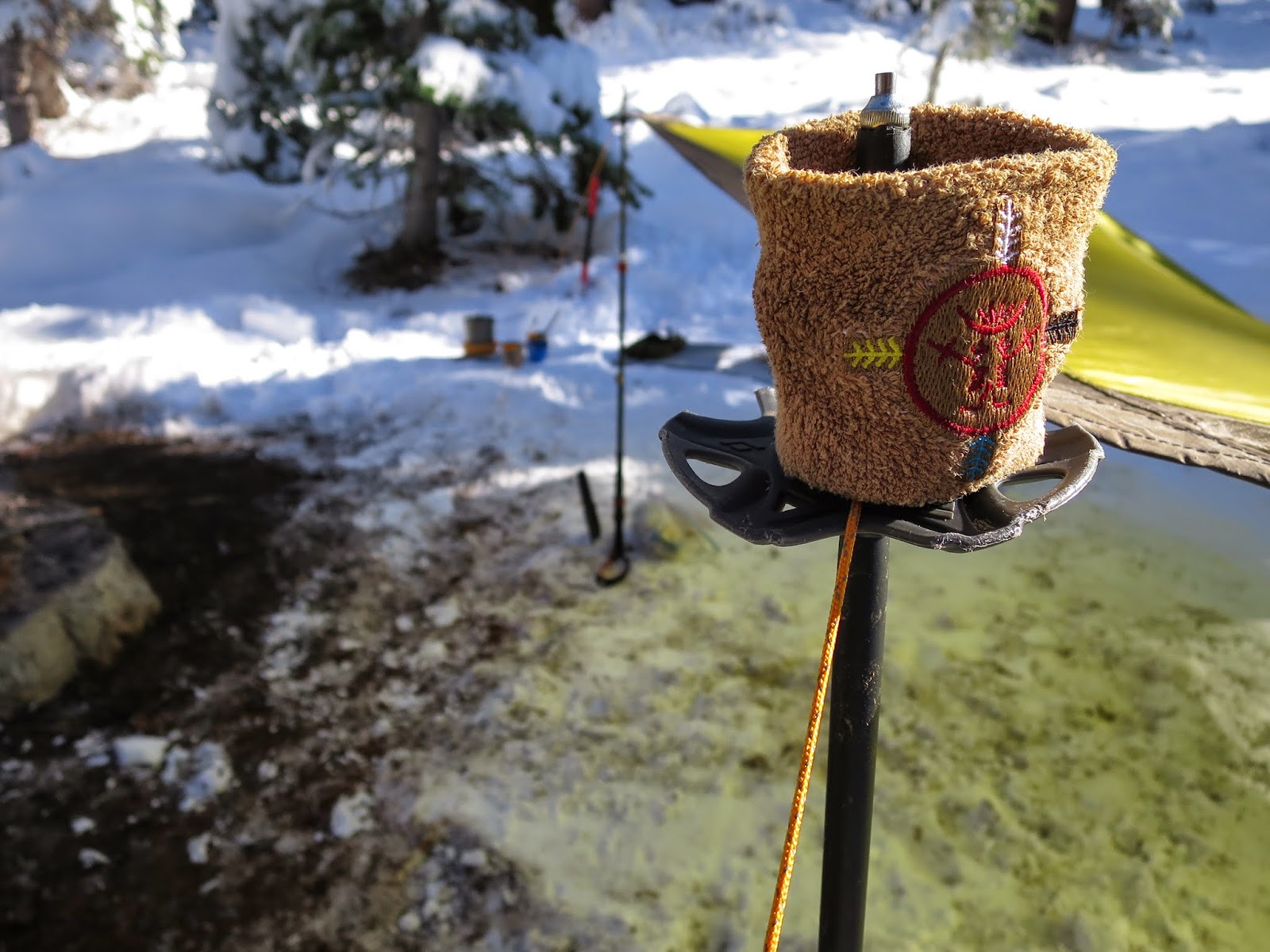
As planning efforts continued, I decided that we could benefit from something special that would keep us all mentally on track and focused. The result was a morale patch. We put our heads together and came up with some design elements that we wanted to see. The patch would note the team members who attended, the date of the event, a topo map of the destination, a boot print to show it was a foot expedition, and of course the X1 designation. After a few sketches and some redesigns we had a draft that we thought looked great. I had my patch maker in New York put everything together and the results were perfect! 

Following this, I needed to devote some time to begin scouting an area where our group could backpack. I wanted to make sure that what I was planning for the group would in fact be what and where we wanted to be. It needed to be a backpacking trip that would be fun, could present components that would relate to creating a mountain hunting base camp, a travel distance that would be reasonable to hike but not too short, and a little elevation to make the effort memorable. I had the perfect place in mind. It would be a little over twelve and a half miles of hiking with an elevation maximum of just below 8,000 feet. Next, it was time to ensure that my scouting partner was prepared to backpack with me. That lucky assistant was my wife.

We began by training during the day and night in a manner that would assure she would be comfortable with a full pack for a hike of that duration. As our training continued, we slowly began to shift to training and general recon by spending time in the area we planned for X1. Since some of this would be during deer season I assured that I had a deer tag just in case. That aspect never materialized but better safe than unprepared.


Our first recon to the X1 destination was a backpacking trip at the end of September. The weather started out fine but became unsettled. Unfortunately, during the mid-way point on our hike in and during our camping days we had lots of rain, sleet, and the occasional snow flurries. The snow was not sticking but the weather was not what most would have ordered.


The photos below are from the second recon trip in mid-October. The weather was absolutely perfect. This was quite a contrast to our first trip to the area. Winds at night gusted over 50 miles per hour just to keep things interesting.


The third and final recon trip occurred on November 1st. We knew that a significant snow storm was expected and thought it would be fun to challenge ourselves a little on the trail and while camping. We had a great time snow camping and it allowed me to share some of the tricks I have learned over the years.




Finally, with the storm window likely to close, we decided to pull the trigger on November 8th for X1. Unfortunately, only a few who had originally wanted and planned to attend were able to do so. Even my friend, for whom this was originally planned, had duty call which resulted in a work scheduling conflict. The U.S. Air Force and our nation needed him and we truly missed his presence. So it would be three of us making our way to our destination; Brent, Kyle, and me.


Our trip started out at a predetermined rallying point where we collected and loaded our equipment. Our friend who was called to duty swung by to see us off. After loading up we headed out for a delicious breakfast. While eating breakfast it was decided that we needed to make a quick stop for a forgotten item. After a dash into a local Walmart we were on our way!


After a two hour drive we arrived at the trailhead. Gear was sorted out, boots were put on, and the adventure was underway. On the way in to what would be base camp, we spent our time enjoying the sights and taking pictures. We had perfect weather with remnants of snow on the ground from the week prior. 


Once we arrived at our intended destination it was time for the usual tasks. Tent sight selection was nailed down, tents were erected, ground pads and sleeping bags set-up, water was purified, and firewood was gathered. While gathering firewood we heard something rustling in Kyle’s tent. It was a rogue chipmunk making himself at home. While checking out the tent Kyle was charged by the chipmunk and in the face of obvious danger managed to only scream moderately. Some off it was captured on film. The video is ridiculous. We finally managed to chase the chipmunk out of the tent without injuries to us, him, or the tent. Once the camp work and chipmunk control was out of the way it was time to watch Kyle catch dinner. Beautiful Golden Trout were on the dinner menu!


As night fell we hauled the fruits of Kyle’s labor back to camp, started a fire to warm up, and began to prepare the grill for some delicious food. Brent, who is forever the planner and cook, brought a couple extra treats along for the group just in case. Two Ribeye steaks (I brought a third as well), baked beans, cubed potatoes with vegetables wrapped in foil, and a mini-keg of Heineken. For my friends reading this from Australia and New Zealand, Ribeye is the same as a Scotch fillet. I am the first to admit that I am a Bitburger or Warsteiner beer guy but I forced myself to raise a couple of titanium mugs of the Holland brewed concoction known as Heineken. I have to admit it was tasty. 


Oh, I forgot to mention that Kyle did not catch any fish for our meal. It was not for a lack of trying but the fish would not cooperate. Because Brent hauled all of the extra weight along for our culinary enjoyment we decided to give him a nickname that would reflect his notable characteristic. We now call him “The Sherpa Porter.” The name was not meant to detract in any way from the actual ethnic group, Sherpa mountaineers, or Sherpa porters. We just felt it was fitting because of the enormous load and his endurance.


As the fire crackled and warmed us we began sharing stories and enjoying our friendship as usually happens when a fire is involved in camp. Once the fire was hot enough we pulled some coals to the side and started cooking the steaks and other items. Let me say that I have eaten more steaks over my lifetime than I probably should admit. I have eaten them in the finest restaurants, during backyard gatherings, and at home. I think this just might have been the very best one of them all.


After dinner we relaxed for hours by the fire and I began preparing mentally for the plan I had concocted. I often use bear canisters with a bear bell attached for storing food around camp. On this trip I decided to use bear bags with bear bells attached. I mentioned to our group how we had seen bear sign on the first two scouting trips and should probably secure everything in the trees. I had Brent and Kyle help me with the task so they were aware of the bells but not my plan. 

My plan was to run fishing leader through my tent door, under the vestibule, up to a branch below the bear bags, and attach an extra bear bell that I had brought along. I was also planning on placing a stuffed black bear next to the tree. The stuffed bear was currently hidden in my pack. When the time was right, I would begin lightly ringing the bell a few times. Whoever decided to crawl out of their tent to confront the beast would be awarded the stuffed animal, the bell, and a Diizche Safari Adventures company patch.

When everyone was almost asleep I set my plan into motion. At first I could not get the bell to ring when I pulled on the fishing leader but patience and persistence finally paid off and the bell jingled. After a short wait I rang it again lightly. After a few more minutes passed I gave it a louder and final ring. Every time I rang the bell I had to hold back the laughter that was trying to explode from within.

Following the third ring Brent said softly, “Shawn did you hear that?” I could hardly contain myself at this point. Brent continued, “It was the bear bell, I heard it three times!” I was ready to scream at this point. Trying to sound serious and somewhat sleepy I said, “Does anyone want to take point on that and check it out?” Kyle responded, “I will check it out.”

I could hear the very slow and quiet noise of his sleeping bag opening and then the slow methodical opening of his tent door zipper. Then all was quiet! After a moment I shouted, “Kyle, can you see a bear out there?” Kyle began laughing loudly, “Yes I can see a black bear out here.” I jumped out of my tent with a camera to present Kyle with his well-earned prize for displaying bravery and calm in the face of an apparent camp intruder. After the pictures were taken Kyle mentioned that he was not sure what he would see outside of his tent. When he unzipped the bottom of the door out came a flashlight with a handgun slowly scanning and as we say, "slicing the pie" until the intruder was safely located and identified. Even in humor we often find a pearl of wisdom. This is a good reminder that how we train is how we will react.


After joking around for a little while we headed back to our sleeping bags and got a good night’s sleep. The next morning Kyle gave the fish another try but they would not cooperate. The trout breakfast menu was modified to dehydrated backpacking fare but the coffee was still French press brewed. After enjoying the mountain morning we put out our campfire and began the hike to the trailhead.


We had a great time together during our short backpacking trip. We made some great memories and made our friendships just a little bit tighter if that is possible. After we got to our vehicle and drove back to “civilization” we decided to fill our bellies with In-N-Out Burgers and fries. We are looking forward to the possibility of our next outdoor trip together. I am making it a point to allow more time for those “let’s do this just for fun” moments. After all, life is too short not to!


Friday, November 28, 2014

A Handy Holster System (Guide's Choice Chest Holster)


If you spend any time at all in the outdoors with a backpack you quickly realize the problems typically associated with accessing a handgun. Especially a handgun that is adequate for work in bear country. Over the years I have tried different options and was never really satisfied.

I recently decided to try a holster system made by Diamond D Leather known as the Guide's Choice Chest Holster. The holster system was designed, tested, and is hand made in Alaska. Diamond D Leather makes other products but this is the one I decided would likely work best for me.

In essence, the Guide's Choice Chest Holster is a leather holster that works as either a chest mount or cross draw system. It is simple in design, easy to adjust, and is comfortable when worn. The system has various options that are available such as mag pouch, speed loader pouch, and open ammo carrier (the Reload).

After looking at the options that were available, I decided that I wanted a basic and uncluttered system without any cartridge holders or speed loaders. I sent a short email to Mike Barrett (Business Manager at Diamond D Leather). I let Mike know that I wanted to purchase two of these holster systems and described the weapon information. Mike responded immediately and advised they could get me what I needed for two of our S&W N Frames (Model 629) in .44 Magnum with four inch barrels. A few short days later I had both of the holsters in hand!


I followed the simple instruction to properly fit the handguns to the holsters and made a couple quick strap adjustments. Set-up was very simple and straight forward. I used the Guide's Choice Chest Holster for about two months to see how we would get along. The holster and I covered over 160 miles together on the trail while wearing a backpack.

A nice feature is this holster system allows for adjustability from a low position to a slightly higher position on the chest as well as other carry options. I have tried the holster in a variety of carry positions and I prefer it riding high on the chest on most occasions. 


While our time together has not been long, the Guide's Choice Chest Holster system has seen rain, sleet, snow and lots of rugged use. This system has allowed me to have a handgun carried securely while being able to quickly and easily bring it into action if needed.

This is a well thought out system that reflects great quality construction and craftsmanship. If a new holster system is in your future take a look at what Diamond D Leather has to offer. You might just find the perfect holster system for your needs. 

Contact Information:
907-631-4212 Leather Shop

Monday, September 15, 2014

How to Treat Snakebites


This information and image are brought to you by our friends at Global Rescue.

Snakes are an integral part to many ecosystems and, as an outdoor enthusiast, it is only a matter of time before you encounter one in the backcountry. Venomous snakes are most prevalent in temperate and tropical climates, with April-October being peak snakebite season. There are roughly 15-20 deaths per year in North America related to venomous snakes. The risk of dying from a venomous bite increases when multiple bites are involved and when the bite occurs in the very young, old, or in persons with underlying respiratory or cardiovascular problems. In the US, venomous snakes account for only about 20% of all snakebites and out of that 20%, many do not result in envenomation. Some studies suggest that up to 20% of rattlesnake bites are deemed ‘dry’ bites, with no venom being injected. Dry biting is a sign of maturity in the snake; more experienced snakes will use a dry bite as they try to gauge the level of a perceived threat and since snakes do not have an infinite amount of venom they will try to use it sparingly.

The majority of poisonous snakes in the US are pit vipers. Rattlesnakes, copperheads, and cottonmouth (water moccasins) snakes are in this family, known as Crotalidae. Typically, pit viper victims tend to be young males, 11-19 years old, who are bitten on the hand while trying to pick up the snake. Alcohol has been shown to be a common factor in these incidents.

The best guideline for snakes is complete avoidance. The old adage that ‘it’s more afraid of you than you are of it’ is generally true, and most snakes only bite when they feel threatened. If snakes are encountered, give them a wide berth and continue on your trek.

As there are many types of snakes, venomous vs. nonvenomous, and different types of venom, hemotoxic vs. neurotoxic, opinions on treatment methodologies can be as numerous as the different snakes themselves. However, many experts tend to agree that certain folklore treatments should be avoided. These include pouring alcohol over the bite, making an incision over the bite site, cauterization, amputation, use of electric shocks, and packing the extremity in ice. Many of these so-called treatments are urban legends. The use of suction (attempting to ‘suck’ the venom out of the bite) is controversial but all experts agree that if attempting this technique you should not use your mouth to apply suction.

Field management for snakebites should focus on limiting the systemic spread of the venom and rapid evacuation of the victim to a hospital equipped to handle envenomations. During the evacuation, you should do the following:

1. Keep the patient calm and inactive. Remove jewelry and constrictive clothing.

2. Clean around the bite site and keep the wound free from dirt and debris by covering with a sterile dressing.

3. Immobilize the limb in a neutral position.

4. Avoid the use of compression bandages unless bite is from a neurotoxic snake (coral snake, cobra, krait, or other).

For those with advanced medical training, continue to monitor vital signs, ensure airway is patent, be prepared to treat victim for anaphylaxis, nausea/vomiting, and pain. The patient should be continuously monitored for the first 4-6 hours. If after 6 hours the victim does not display any adverse signs or symptoms, it is generally safe to suspect a bite without envenomation. Support hydration orally if possible, start an IV in an unaffected limb if available. Defer food ingestion during prompt evacuations; if a prolonged evacuation is presented, nourishment will become important to support strength and health. Avoid alcohol intake. Evaluate victim’s tetanus status and consider giving tetanus toxoid. Antivenin is the only proven therapy for snakebite but only when it is specific for the snake involved. DO NOT try to kill or capture the snake for identification purposes. Dead snakes, even several hours later, can reflexively bite injecting venom causing either a second bite or biting another member of the group. Embrace technology and snap a photo with your smartphone…using the zoom!

Wherever your travel takes you, Global Rescue encourages you to do a thorough area study of your destination and research the native flora and fauna that might be harmful.


Read more about a medical evacuation conducted by Global Rescue for a member bitten by an African cobra in Namibia.

Call Global Rescue immediately at 617-459-4200 if you are a traveling Global Rescue member and have questions, symptoms, or concerns about your health.


Note-Diizche Safari Adventures is not licensed to practice medicine or offer medical advice for the treatment of illness or injury. Please seek immediate emergency medical services for the treatment of illness or injury. 

Monday, August 4, 2014

Ebola HF: What You Should Know


This information and image are brought to you by our friends at Global Rescue.

The growing Ebola crisis prompted the U.S. Centers for Disease Control and Prevention to issue a warning on July 31 against non-essential travel to Guinea, Liberia, and Sierra Leone, the West African countries experiencing the outbreak. Also on July 31, the government of Sierra Leone declared a public health emergency to ensure a proper response plan was being implemented to handle the outbreak of the Ebola virus. Additionally, the Ghanaian government announced on July 31 that enhanced medical screening in the form of body temperature scans will take place for those arriving at border crossings as well as at Kotoka International Airport (ACC) in the capital, Accra. Quarantine areas will also be set up at ACC and the country’s border crossings.

Global Rescue is advising their members to closely adhere to the World Health Organization guidelines. Infection by the Ebola virus is by contact with blood or body fluids of an infected person or animal, or by contact with contaminated objects:

-Contact with blood or bodily fluids of a person or corpse infected with the Ebola virus.

-Contact with or handling of wild animals, alive or dead or their raw or undercooked meat.

-Having sexual intercourse with a sick person or a person recovering from Ebola virus disease (EVD) for at least 7 weeks.

-Having contact with any object, such as needles, that has been contaminated with blood or bodily fluids.

-Symptoms include fever, weakness, muscle pain, headache and sore throat. This is followed by vomiting, diarrhea, rash, and in some cases, bleeding.

-Persons who come into direct contact with body fluids of an infected person or animal are at risk.

-There is no licensed vaccine.

Practice careful hygiene and other preventive measures:
-In case of a passenger presenting with symptoms compatible with EVD (fever, weakness, muscle pain, headache, sore throat, vomiting, diarrhea, bleeding) on board of an aircraft, the following measures should be immediately considered, in accordance with operational procedures recommended by the International Air Transport Association (IATA):

-Distancing of other passengers if possible from the symptomatic passenger (re-seating); with the ill travelers preferably near a toilet, for his/her exclusive use.

-Covering nose and mouth of the patient with a surgical facemask (if tolerated).

-Limiting contacts to the passenger to the minimum necessary. More specifically, only one or two (if ill passenger requires more assistance) cabin crew should be taking care of the ill passenger and preferably only the cabin crew that have already been in contact with that passenger.

-Hand washing with soap after any direct or indirect contact with the passenger.

-Immediate notification of authorities at the destination airport in accordance with procedures promulgated by the International Civil Aviation Organization (ICAO).

-Immediate isolation of passenger upon arrival.

-Avoid all contact with blood and body fluids of infected people or animals.

-Do not handle items that may have come in contact with an infected person’s blood or body fluids.

-Avoid contact with wild animals. Do not eat primate meat (“bush meat”).

-Practice good hand washing.

-If you have stayed in the areas where Ebola cases have been recently reported, seek medical attention if you feel sick (fever, headache, achiness, sore throat, diarrhea, vomiting, stomach pain, rash, or red eyes).

-The incubation period of EVD varies from 2 to 21 days. Person-to-person transmission by means of direct contact with infected persons or their body fluids/secretions is considered the principal mode of transmission. In a household study, secondary transmission took place only if direct physical contact occurred. No transmission was reported without this direct contact. Airborne transmission has not been documented during previous EVD outbreaks.

The following link can be accessed for more information: 


Call Global Rescue immediately at 617-459-4200 if you are a traveling Global Rescue member and have questions, symptoms, or concerns about your health.

Note-Diizche Safari Adventures is not licensed to practice medicine or offer medical advice for the treatment of illness or injury. Please seek immediate emergency medical services for the treatment of illness or injury. 

Saturday, July 19, 2014

2014 Safari Rifle Challenge World Championships: Final Report


The 2014 Safari Rifle Challenge World Championships have now concluded. The event was held in Libby, Montana at the Libby Rod and Gun Club. Judging by all of the positive feedback from those that attended, the event was a lot of fun and a great day was had by all! Diizche Safari Adventures was proud to be a sponsor of this year’s fourth annual event. This year’s sponsors, in the order they appeared on the reverse of the event T-Shirt, includes:

Diizche Safari Adventures http://diizchesafariadventures.com/  
Montana Rifle Company http://montanarifleco.com
Mark Sullivan, Professional Hunter-Nitro Express Safaris http://www.nitroexpresssafaris.com/ 
Ruger Firearms www.ruger.com
Wayne Jacobsen-American Hunting Rifles http://www.hunting-rifles.com
Tim Herald-Magnum Hunting Club http://www.magnumhuntclub.com/
Bill Stewart-Red Dirt Elephant
Larry Shores-Shores, Tagman, Butler & Company, PA http://www.shorescpa.com/
Ivan Carter, Professional Hunter http://ivancarter.com/  
Hunters Headquarters http://www.huntersheadquarters.net/ 
Libby Rod and Gun Club  

The plaque shown above is the generic version that was created and donated by us to be presented to the First Place-Overall shooter. I am happy to announce that Andy Larsson from Skinner Sights was the recipient of this First Place-Overall award. Andy was able to shoot straight while also having a lot of fun. Congratulations to Andy! We will be providing Andy a new brass plate for his award so he can display it proudly.

Andy Larsson with His First Place-Overall Trophy
Jay Sheffield was the Match Director for the 2014 Safari Rifle Challenge World Championships. Jay spent a great deal of time coordinating all aspects of event planning, logistics, and donation outreach in addition to the match component. Jay does this each year for the Safari Rifle Challenge World Championships event. Jay provided a post shoot update which I have copied below. I hope you enjoy the narrative, photos, and video link:  

Well, the fourth annual Safari Rifle Challenge World Championships is in the history books and will hopefully be remembered as the best one yet. We had nearly 60 registered shooters from all over the western states (is Texas in the west?) and Canada. An army of volunteers working two ranges, a registration/scorekeeper booth, a raffle booth that drew a name every 5 minutes throughout the day as well as a cook staff to keep us all fed at noon made me very proud.

So, let it be known that Andy Larsson (owner of Skinner Sights) is now the reigning champion of the Safari Rifle Challenge 2014! He narrowly edged out Andy Eff who took second place. For those that missed the shoot, you will be able to read about it in upcoming issues of Outdoor Life and Rifle magazines as John Snow and John Haviland were both in attendance. And for those who can't read, Michael Bane and his crew were also there filming for an upcoming edition of Shooting Gallery on the Outdoor Channel. More to come tomorrow, but thanks for all of your continued support, particularly Jeff Sipe and the staff at Montana Rifle Company and Shawn Joyce of Diizche Safari Adventures. Both are major supporters and their contributions made this event a day to remember!

For those that are interested in such things, this was the course of fire:

2014 Safari Rifle Challenge World Championships
Course of Fire / Stage Descriptions

Muzzle UP and Action OPEN while entering and exiting the range. Do not pick up brass, it will be gathered for you. Confirm your score while still on the firing line.

Stage 1 “Sight in at camp with ReVersa Target Stands”. (Distance 45 yards, round count 2) Starting position is standing with an EMPTY rifle, action closed, safety off; rifle must be held with both hands in the firing position and aimed at the target. On the signal, keeping muzzle pointed safely down range at all times, shooter will retrieve one round, load and fire, reload one round and fire again. Open action for inspection and keep the muzzle pointed up when directed to exit the range.

Stage 2 “Montana Rifle Co. Fast Blast”. (Two shooters, 2 rows of jugs, Distance 25, 35, 45 yards, round count 3). Starting position is standing with 2 rounds in rifle, safety on, finger OFF trigger, low ready position. On the signal shoot any two jugs, reload ONE round and shoot third jug. The first shooter to hit all three jugs receives an additional 1 point. Open action for inspection. Muzzle up to exit the range.

Stage 3 “Diizche Safari Elephant Hunt”. (Distance 25, 45 yards, round count 2). Starting position is standing with one round in chamber, safety on, finger off the trigger, rifle in low ready position. On the signal shoot the 45 yard side brain elephant. After firing, move diagonally approximately 5 yards to the marked position, reload with one round and shoot the 25 yard frontal brain elephant target. Open action for inspection. Muzzle up to exit the range.

Stage 4 “Nitro Express Safaris Crossing Buffalo”. (Distance 40 yards, round count 2). Starting position will be standing with 2 rounds in the rifle, safety on and finger off of the trigger, low ready position. On the signal a crossing buffalo with a gallon jug “lung” will start across in front of you. If you burst the jug with the first shot you will earn 10 points, if you burst it on the second shot then you will only receive 5 points. Open action for inspection, muzzle pointed up when exiting the range.

Stage 5 “Champion DuraSeal Challenge” (Distance 20, 40 yards, round count 2) Starting position is standing with 2 rounds in the rifle, safety on, finger off the trigger, low ready position. On the signal, shoot the hanging three inch DuraSeal ball at 20 yards then shoot the four inch DuraSeal diamond spinner at 40 yards. Shooter earns 10 points per hit. Open action for inspection, muzzle up to exit the range.

Stage 6 “Crocodile DuraSeal Brain Shot” (Distance 75 yards, round count 1) Starting position is shooters choice of standing offhand, standing with sticks, kneeling, or seated on the bare ground. One round in chamber, safety on, finger off the trigger, muzzle pointed down range. On the signal fire one round into the RED DuraSeal “brain” causing it to spin and you will earn 10 points. Hits anywhere else are scored as a miss. Action open for inspection, muzzle up to exit range.

Stage 7 “Nitro Express Safaris Charging Buffalo” (Distance 40 and 15 yards, round count 2) Starting position is standing, 2 rounds in rifle, safety on and finger off the trigger, low ready position. On the signal, the 15 yard buffalo will begin its charge. You must FIRST shoot the gallon water jug at 40 yards and then shoot the charging buffalo with your second shot. 10 points for a burst jug and actual points earned on the Champion target placed over the buffalo brain. Open action for inspection, muzzle up to exit the range.

Stage 8 “Diizche Safari's, Save the Tourist”. (Distance, crossing at 25 yards. Round count 1). Shooter will load and chamber 1 round, engage safety and place rifle on the table. Shooter will then take a seat in the chair 5 yards away from the table. On the signal, the leopard starts and the shooter will move forward, pick up rifle and shoot the crossing leopard, firing one round into the Champion paper target placed over the leopards’ lung area before it gets to the tourist. Points earned will be the actual number scored on the paper target, body hits will be scored as a miss. Open action for inspection, muzzle up while exiting the range.

Stage 9 “Montana Rifle Company Charging Jug Shootout” (Two shooters, Distance; charging from 15 yards, round count 2,) Starting position is standing with 2 rounds in rifle, safety on, finger off the trigger, low ready position. On the signal a cart with 3 hanging jugs charges the two shooters. Shooter on left shoots left jug for 10pts, shooter on right shoots the right jug for 10pts. Once your jug bursts, you may then engage the center jug. Shooter that bursts the center jug earns 10 more points. In case of a tie on middle jug, both shooters will fully load their rifles, safety on, low ready start position. On the signal, each will engage the 50 yard jug placed in front of them. First shooter to burst their jug earns 10 points. Open action for inspection. Muzzle up to exit the range. https://www.youtube.com/watch?v=SsWN0_la3OU

Stage 10 “ReVersa Targets Precision Shoot”. (Distance 25, 35, 45 yards, round count 3). Starting position will be standing with 2 rounds in the rifle, safety on, finger off the trigger, low ready position. On the signal, shoot the 25 and then 35 yard clay birds in the ReVersa Target holder. Transition to the kneeling position, load one additional round, remain kneeling and shoot the 45 yard clay bird. You earn 10 points for each clay target hit. Open action for inspection, muzzle up to exit the range.

Bringing Water Jugs to the Shoot
Registration
Ron Petty of Norma USA and Jeff Sipe of Montana Rifle Company
Stage 4-Nitro Express Safaris Crossing Buffalo
Wayne Jacobsen of American Hunting Rifles Interviewed by Michael Bane
Stage 3-Diizche Safari Elephant Hunt
John Snow of Outdoor Life Magazine & Jeff Sipe
Gene Gordner Checking Out the Raffle Table
Stage 9-Montana Rifle Company Charging Jug Shoot
Shooting Birds in the ReVersa Target Stands
Stage 8-Diizche Safari, Save the Tourist
John Snow (L) and John Haviland (R) Looking at Gene's Old Guns
The Montana Rifle Company Booth
Stage 6-Crocodile DuraSeal Brain Shot
Participant Shirt-Front (Sponsors on Reverse)
If you would like more information about participating in next year’s event, tentatively planned to be held July 2015, be sure to send an email to the attention of Jay Sheffield at: 

Saturday, June 7, 2014

Who Wants To Shoot An Elephant?

Photographs by David Chancellor
Wells Tower, GQ Corrrespondent
Illustrations by Rus Khasanov

Russ Tower joins an exclusive hunting party and reports on one of the last elephant hunts in Botswana with Jeff Rann...If hunting is so disastrous for the long-term survival of the species, why do the countries where it’s legal to hunt elephants have so many more of them than those where the practice is banned?